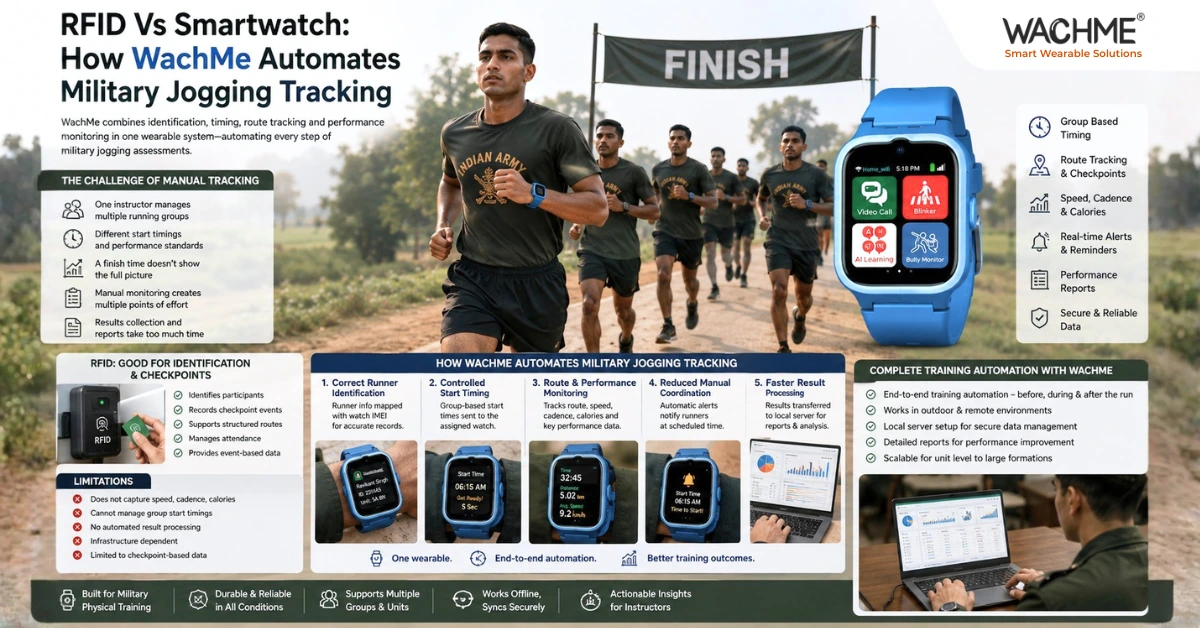
Military jogging tracking is not simply about recording who reaches the finish line first. The real challenge is managing large groups, different start timings, runner identity, route compliance, performance data and reporting. RFID can support identification and checkpoints, while a smart wearable such as WachMe can automate a wider physical training workflow. Read further to understand how.
When Military Jogging Tracking Becomes a Large-Scale Operational Challenge
As the number of participants increases, jogging monitoring becomes an operational task rather than a simple timing exercise. Instructors may need to manage groups, routes, timings and results simultaneously.
One Instructor Can Be Responsible for Multiple Running Groups
Different groups may follow different performance standards and start times. WachMe allows group based timing to be configured and delivered to assigned devices, reducing the need for instructors to manually coordinate every runner.
A Finish Time Alone Does Not Describe the Entire Run
A finish time gives only one result. WachMe’s jogging workflow is designed to record additional information such as cadence, average speed, calories and route related activity for a broader performance picture.
Manual Monitoring Creates Multiple Points
Manual processes can involve assigning runners, communicating start times, monitoring the drill, recording results and preparing reports. WachMe connects these stages through wearable assignment, automated timing and local result reporting.
Military Physical Training Requires More Than Knowing Who Crossed the Finish Line
A structured physical training assessment needs information from before, during and after the run. The following elements show why timing alone may not provide a complete operational picture.
-
Correct Runner Identification
Every recorded result needs to be connected to the right individual. WachMe’s local server workflow maps runner information and watch IMEI, helping create an identity-linked training record.
-
Controlled Start Timing
Different groups may need different start schedules. WachMe supports group-based timing configuration so the relevant start time can be sent to the assigned wearable device before the drill begins.
-
Route and Performance Monitoring
Military jogging may involve defined routes and critical points. WachMe is designed around preconfigured route information while recording performance-related data, including speed, cadence and other documented activity metrics.
-
Reduced Manual Coordination
The instructor should not need to individually manage every start. The documented workflow allows the device to prepare for the drill and provide an alert at the scheduled time.
-
Faster Result Processing
Collecting timings is only one stage. WachMe is designed to transfer run results into a local reporting workflow, where performance can be processed and categorised after the activity.
Where RFID Solves the Identification and Checkpoint Problem
RFID remains useful for many identification and checkpoint-based applications. In a jogging environment, it can help establish whether a tagged participant has reached a monitored location. However, the overall capability depends on how the RFID system is designed and deployed.
-
Identifying Participants
An RFID tag can be associated with a participant and detected by compatible readers. This makes RFID suitable for identification-based processes where the main requirement is recognising a person or tag.
-
Recording Checkpoint Events
RFID systems can record a detection event when a tag comes within the required range of a reader. This can support checkpoint-based monitoring where specific physical locations need confirmation.
-
Supporting Structured Routes
Where checkpoints are fixed, RFID infrastructure can be arranged around a planned route. The process can provide event-based records at the locations covered by the installed system.
-
Managing Attendance Processes
RFID technology can also support attendance and access-related workflows. Its strength lies in recognising an assigned tag when it interacts with a compatible reader or monitoring point.
-
Providing Event-Based Data
RFID can provide useful data about when a tag was detected at a particular point. However, an organisation may need additional systems if it requires wider running metrics and a complete training automation workflow.
The Operational Gap Between Checkpoint Detection and Complete Training Automation
The central issue is not whether RFID works. The real question is whether identification and checkpoint detection alone cover every stage of military jogging assessment.
-
A Checkpoint Is Not the Complete Run
Detecting a runner at a point confirms an event. It does not automatically provide the broader set of performance information that a wearable-based training workflow can collect during the activity.
-
Changing Routes Can Change Requirements
Military training routes may not always remain permanently fixed. A system based on physical monitoring points may require operational changes when the route changes, depending on its deployment design.
-
Start Management Remains a Separate Challenge
A large drill may involve different groups and timings. WachMe addresses this workflow by allowing group-based start schedules to be configured and delivered to individual assigned devices.
-
Performance Data Can Become Fragmented
Timing, identity, route information and reporting may exist across different processes. WachMe is designed to connect these stages through one wearable-based workflow rather than treating each stage separately.
-
Reporting Still Needs to Follow the Activity
A useful training system should move from activity to assessment. WachMe’s documented process transfers results to a local laptop-based environment for reporting and performance categorisation.
How WachMe Connects the Runner, Instructor, Route and Report into One Workflow
WachMe’s approach is based on connecting multiple stages of the jogging process. The aim is to reduce fragmentation between runner identity, drill setup, activity monitoring and final reporting.
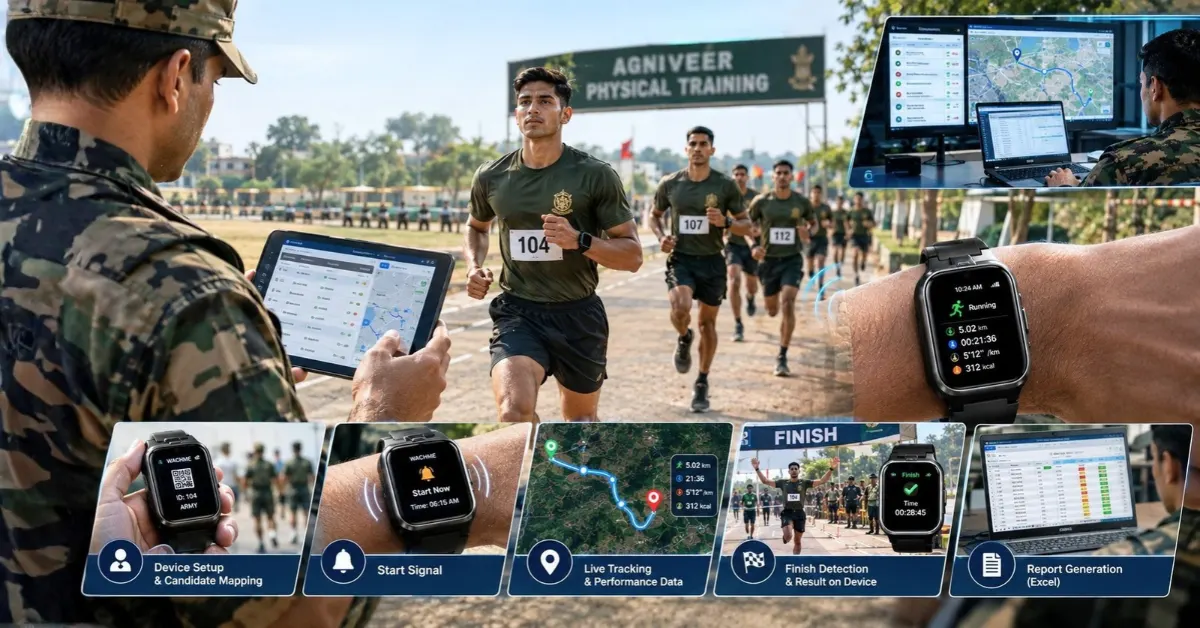
Step 1: Each WachMe Device Is Assigned to an Individual Runner
Runner information can be mapped to the assigned WachMe device through its IMEI and local server records. This creates an identity-linked foundation before physical training begins.
Step 2: The Instructor Configures the Drill Instead of Managing Every Runner Manually
The instructor can configure group-based start timings through the controller workflow. This supports organised management of different running groups without manually coordinating each individual start.
Step 3: The Watch Receives the Required Start Timing
After GPS acquisition and drill preparation, the assigned device can receive the relevant start timing. This connects the runner’s group and scheduled activity directly with the wearable.
Step 4: WachMe Automatically Arms the Runner for the Drill
The system is designed to prepare the device for the upcoming activity. This automated stage reduces dependence on continuous manual instructions once the training workflow has been configured.
Step 5: The Device Alerts the Runner When It Is Time to Start
At the scheduled time, the documented workflow can use vibration, spoken instruction and screen activation to alert the runner. This provides a direct wearable-based start signal.
Step 6: The Watch Records the Run Instead of Requiring Continuous Manual Observation
During the jogging activity, WachMe can record metrics such as cadence, average speed and calories while supporting route-related monitoring within the configured training workflow.
Step 7: The Finish Event Triggers Result Handling
Once the activity is completed, the system is designed to handle the recorded result through the finish workflow. This creates a transition from physical activity to structured performance processing.
Step 8: Results Move Into the Reporting System
The documented workflow allows run results to move to a local laptop based system for Excel reporting and performance categorisation, with a manual upload option available as a backup.
Why Military Training Automation Cannot Always Depend on Continuous Internet Connectivity
Military and institutional training can take place in environments where continuous internet connectivity may not be available, practical or preferred. WachMe therefore uses a local communication approach for the documented jogging workflow.
-
Training Can Continue Without Continuous Internet
The documented system does not require internet connectivity for tracking and reporting during the jogging activity. Watches can operate in the described workflow without relying on continuous cloud communication.
-
Local Communication Supports Drill Coordination
A local hotspot and WiFi-based setup can support communication between the instructor workflow and assigned devices without requiring normal internet access during the training session.
-
Results Can Stay Within the Local Workflow
Run results can be transferred to a local laptop-based server at the finish stage. This keeps the operational reporting process connected to the training environment.
-
Remote Training Environments Need Fewer Dependencies
A local architecture reduces dependence on permanent connectivity during the activity. This can be useful for temporary, remote or controlled training environments where infrastructure requirements need to remain manageable.
-
Manual Backup Supports Operational Continuity
The WachMe workflow also documents a manual result upload option if automatic transfer does not occur. This provides an additional process for handling recorded training data.
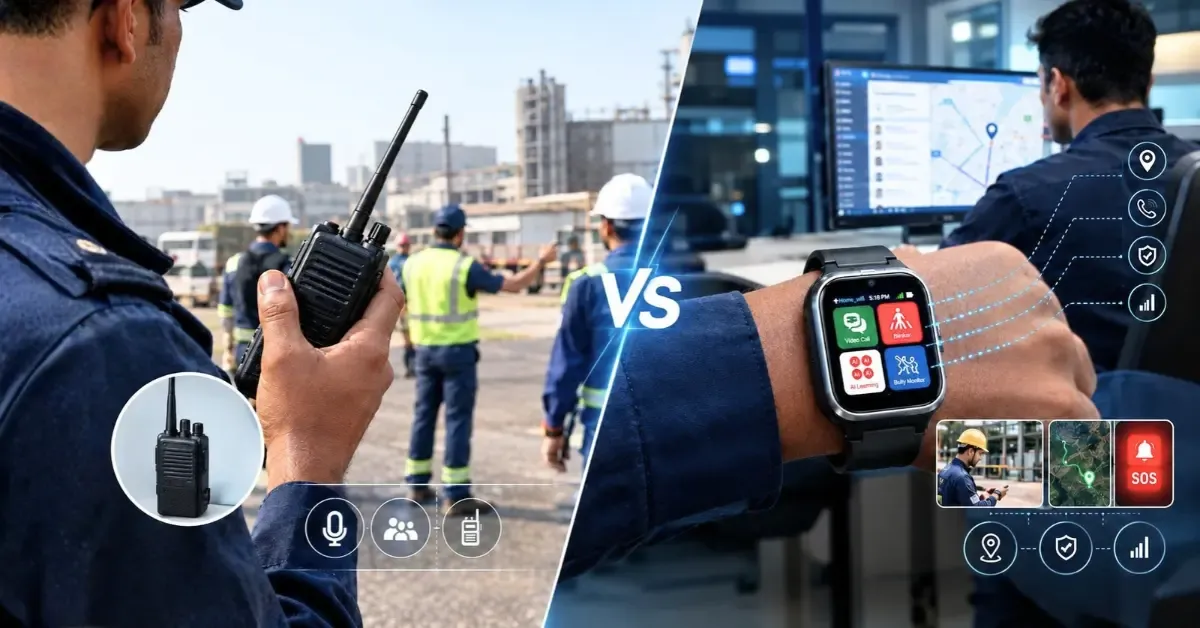
RFID Vs Smartwatch: Comparing Two Approaches to Military Jogging Monitoring
| Operational Requirement |
RFID Based Approach |
WachMe Smart Wearable Approach |
| Primary role |
Identification and event detection |
Wearable-based training automation |
| Runner identification |
Tag linked with participant |
Runner information linked with assigned device |
| Start timing |
Depends on system design |
Group-based timing can be delivered to devices |
| Running metrics |
Depends on implementation |
Documented metrics include cadence, average speed and calories |
| Route monitoring |
Depends on checkpoint deployment |
GPS and configured route workflow |
| Critical points |
Reader based monitoring points |
Preconfigured critical points in documented workflow |
| Manual coordination |
Depends on system configuration |
Automated device arming and scheduled alerts |
| Reporting |
Depends on connected software |
Local result transfer and Excel based reporting workflow |
| Internet dependency |
Depends on deployment |
Continuous internet not required during documented training workflow |
| Wider platform use |
Depends on RFID system |
Wearable platform with future OS based possibilities |
The Smartwatch Is the Interface. The Physical Training Automation System Is the Product
Calling WachMe only a smartwatch does not explain the complete system. The wearable is the individual interface, but the overall solution includes software, local communication, instructor control and reporting.
The Wearable Layer
The WachMe device provides the physical interface carried by the runner. Its documented capabilities include GPS, WiFi, Bluetooth, activity tracking, a step counter and other hardware features.
The WachMe OS Layer
WachMe Wear OS provides the software layer behind the wearable workflow. This allows the platform to support configured training logic rather than functioning only as a general consumer smartwatch.
The Instructor Control Layer
The instructor control process supports drill configuration and group based start timing. This allows the operational plan to be connected with the devices assigned to participating runners.
The Local Communication Layer
Local hotspots, WiFi routers and laptop based systems form part of the documented workflow. This supports communication and result handling without requiring continuous internet connectivity during training.
The Reporting Layer
The final layer converts recorded activity into usable results. WachMe’s workflow includes local result transfer and Excel-based performance categorisation for structured post run assessment.
Why Flexible Training Routes Need Flexible Monitoring Systems
Military jogging routes may change because of training objectives, location availability or operational requirements. A monitoring system should adapt to the drill instead of forcing every exercise around permanent infrastructure.
-
Route Changes Should Be Manageable
Training routes are not always permanent. WachMe can work with configured route information, allowing the monitoring workflow to support different jogging drills and training layouts.
-
Critical Points Can Be Part of the Drill
Important locations can be included within the training setup. WachMe’s documented workflow supports pre-programmed route critical points alongside the jogging monitoring process.
-
Monitoring Moves With the Runner
A wearable travels with the participant. This creates a different approach from fixed detection points and allows the monitoring process to remain connected with the individual runner.
-
GPS Supports Route-Based Activities
WachMe uses GPS within its documented jogging workflow. This supports location-based training activities and helps connect the recorded performance with the configured running environment.
-
Less Dependence on Permanent Setup
Wearable-based monitoring can reduce dependence on permanently installed infrastructure. This can be useful where training grounds or jogging routes need to remain operationally flexible.
Military Jogging Assessment Is Moving Beyond Time Alone
A stopwatch can measure duration. Modern wearable technology can collect additional activity information. This gives organisations more context when reviewing structured physical training performance.
-
Average Speed Adds Context
Average speed helps explain how the participant completed the activity. WachMe records this metric alongside other jogging information within its physical training monitoring workflow.
-
Cadence Shows Running Activity
Cadence records the runner’s step rhythm. This provides another activity measure beyond the final time and forms part of the performance information documented for WachMe.
-
Calories Provide Additional Activity Data
Calories can provide an additional estimate of physical activity. WachMe includes calorie-related data within its documented jogging monitoring and performance tracking workflow.
-
Route Activity Matters
Performance is connected with the required training route. WachMe supports route-related monitoring, helping organisations view jogging activity as more than a simple start and finish event.
-
Multiple Data Points Support Better Review
Time remains important. However, combining timing with speed, cadence and other available activity information can create a broader record for structured physical training assessment.
From Runner Identity to Final Performance Report Without Rebuilding the Process at Every Stage
One of the main challenges in large-scale training is moving information between separate systems. WachMe is designed to connect the major stages into one continuous workflow.
-
Start With the Assigned Runner
The process begins by linking the participant with the assigned device. WachMe uses runner information and device identification within its documented local server workflow.
-
Configure the Required Drill
The instructor can prepare group-based timings and training requirements. This connects the planned exercise with the devices before participants begin their physical activity.
-
Automate the Start Process
The assigned device can receive the required timing and prepare for the activity. At the scheduled time, the documented workflow provides the runner with an automated alert.
-
Record the Activity
During the jogging activity, WachMe records documented performance information including average speed, cadence and calories while supporting the wider route monitoring workflow.
-
Move Directly Towards Reporting
After the run, results can transfer to a local laptop-based system. The documented process supports Excel reporting and performance categorisation without rebuilding records manually.
Book a WachMe Wearable Tech Demo
Understanding automated military jogging tracking is easier when the complete workflow is seen in practice. The WachMe team can visit your training centre and demonstrate how device assignment, automated timing, jogging monitoring and local reporting work together. Contact WachMe to discuss your training requirements and arrange a wearable technology demonstration.
Conclusion
RFID and smart wearables serve different purposes in military jogging monitoring. RFID can support identification and checkpoint-based processes. A wearable-based system can take a broader role by connecting the runner with the training workflow.
This is the key difference behind automated physical training monitoring.
WachMe combines wearable technology with GPS-based activity monitoring, group timing, automated start alerts, local communication and result reporting. The objective is not simply to replace one tag with one watch.
It is to reduce the number of separate processes involved in organising, monitoring and assessing a large group of runners.
FAQs
Can WachMe be used for large military jogging groups?
WachMe is designed around individual device assignment and group based timings, supporting structured monitoring workflows for multiple participants.
Does WachMe require continuous internet during jogging tracking?
WachMe’s documented workflow uses local communication and reporting, without requiring continuous internet connectivity during the training activity. No data is ever put on the internet so military data remains totally safe
Can WachMe track more than finishing time?
WachMe’s documented jogging workflow includes average speed, cadence, calories and route-related monitoring alongside timing and result processing.
Can WachMe replace every RFID system?
Not necessarily. RFID and WachMe serve different workflows. WachMe is designed for broader wearable-based physical training automation.
How can an organisation evaluate WachMe for its training centre?
An organisation can arrange a WachMe wearable technology demonstration to understand device assignment, timing, jogging monitoring and local reporting workflows.