Precise coordination is critical in defence manufacturing between production teams, maintenance engineers and authorised contractors. However, stringent security protocols may strict employees from carrying their personal mobile phones inside manufacturing units. This creates problems in communication and other activities for the employees. Managed wearables offer an alternative approach, provided they meet each facility’s security requirements.
Smartphone Access Restrictions in Defence Manufacturing Units
Manufacturing plants in the defence industry manufacture military vehicles, aircraft parts, weapons systems, radars, and other sensitive technologies. The functioning of such manufacturing units consists of controlled production areas, confidential engineering information and strict personnel authorisation procedures.
Smartphones belonging to individual users are prohibited in certain zones due to the possible security threats posed by the cameras, wireless connectivity and unmanaged applications. Certain installations might also restrict the use of electronic gadgets near sensitive equipment or testing operations. However, the restrictions pose practical challenges.
The employees still require instructions regarding work instructions, coordinating maintenance activities and reporting incidents. Thus, the manufacturers should adopt an authorized means of communicating and managing the workforce that facilitates the process without violating the security procedures of the site.
Why Staff Coordination Is Challenging in Mobile-Restricted Defence Manufacturing
The use of smartphones in the workplace can affect various activities of the workforce that are interconnected. In particular, supervisors may lose access to familiar messaging channels, while production managers need to communicate with employees employed in assembly lines, engineering departments and maintenance shifts.
Three challenges require particular attention:
- Shift coordination: Late arrivals, unexpected absences and shift changes can leave production teams short-staffed if attendance records are not updated promptly.
- Communication between departments: Maintenance engineers and production supervisors need to exchange authorised instructions without depending on personal messaging applications.
- Workforce accountability: Managers need reliable records of attendance and staff presence to support operational planning and established safety procedures.
WachMe Supporting Secure Staff Communication in Smartphone-Restricted Environments
A managed device offers a designated pathway of communicating at work, which does not necessitate the use of their own smartphones by the employees. In the case of defence manufacturers, it is not just about replacing the phone that is the key issue. It is about creating a controlled method of coordinating the staff in an approved operating environment.
WachMe is a wearable workforce management device that combines staff communication, attendance monitoring and workforce visibility. The employer-managed approach of WachMe helps organisations distinguish professional communication from personal applications.
It is important for the manufacturers to determine what device functions are permitted, which employees may communicate through the system and how the data about the workforce is being managed.
Key Features: How Managed Wearables Support Staff Coordination in Defence Manufacturing
Controlled Communication Without Personal Smartphones
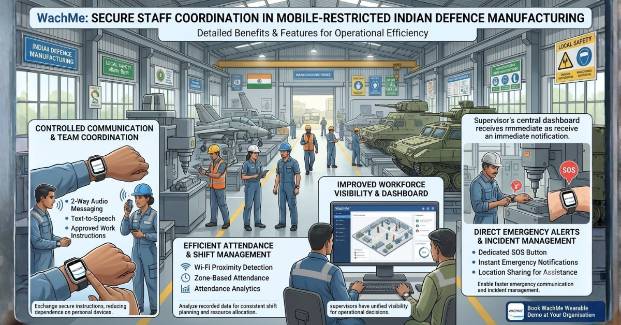
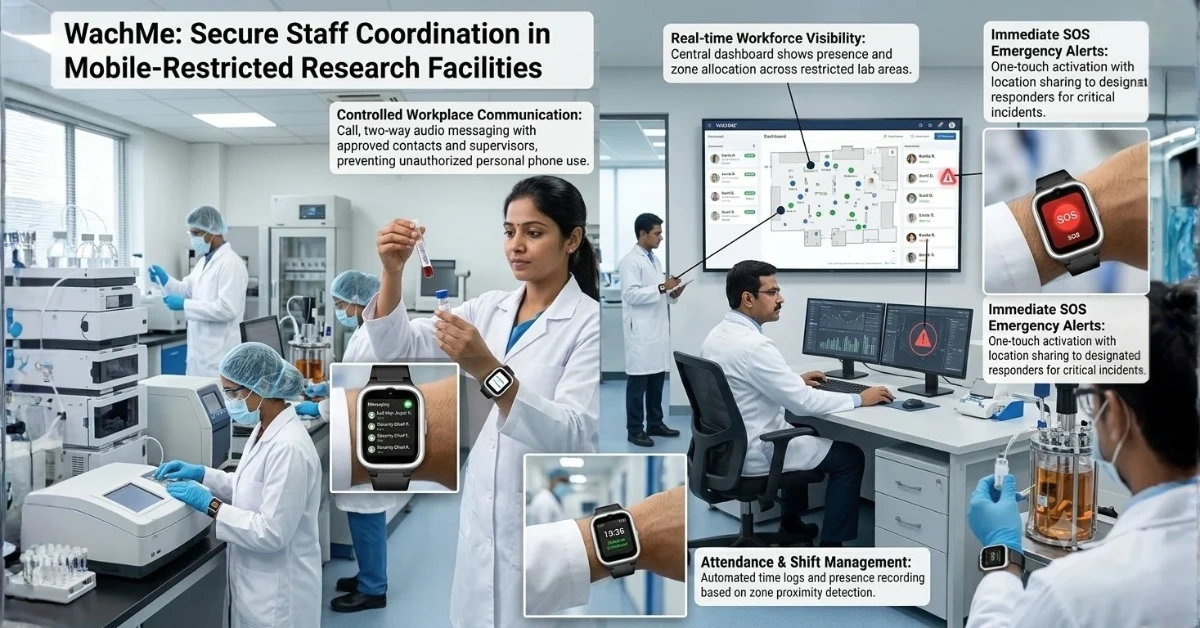
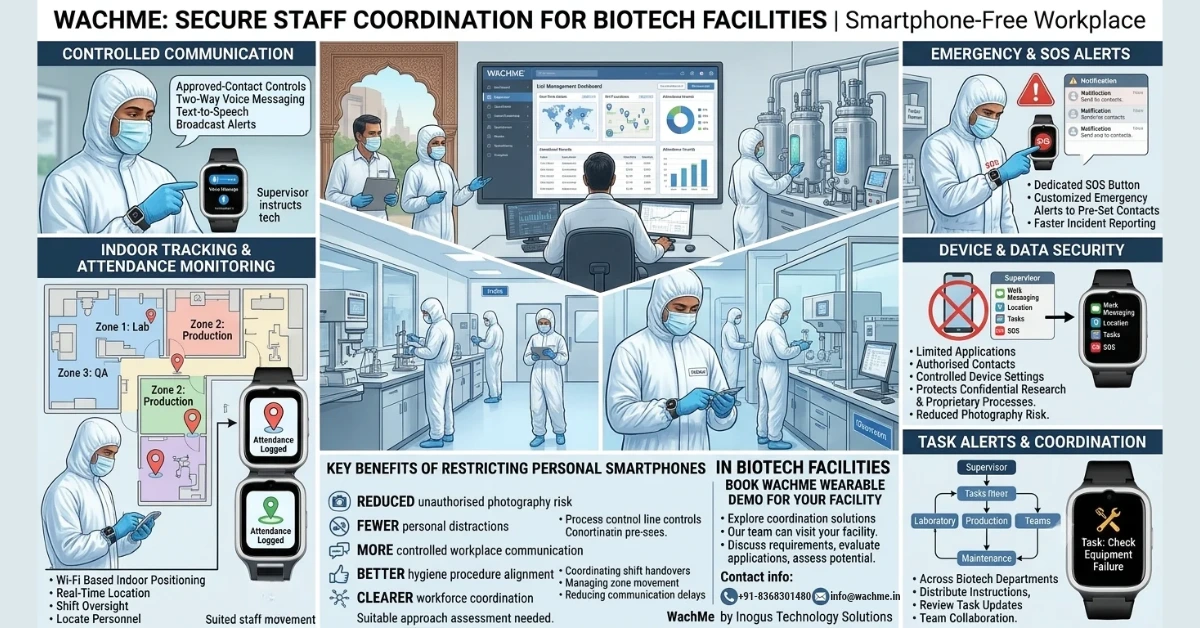
WachMe provides a dedicated wearable that allows communication through approved numbers, two-way audio messaging, and text-to-speech functionality. Authorised staff can communicate their work instructions using the WachMe smartwatch without having to use personal messaging applications. This can aid in the coordination of production supervisors and maintenance staff, subject to approved communication policies and site security requirements.
Attendance and Shift Management Across Production Teams
WachMe helps track attendance and time tracking through features such as Wi-Fi proximity detection, zone-based attendance and reporting. Shift managers can analyse the recorded attendance and spot possible staffing shortages on any manufacturing shift. This information can be used to plan shifts and allocate staff, provided that the system is properly set up and tested for that particular work environment.
Workforce Visibility Across Approved Work Areas
WachMe system combines indoor positioning through Wi-Fi with outdoor location technologies such as GPS and location-based services. In its central dashboard, it shows the status and location of the staff when available. This can be used to help supervisors manage the personnel in the designated areas of production and maintenance. Location tracking does not verify security clearance or replace physical access-control systems.
Emergency Alerts for Manufacturing Personnel
The employees handling operations near the machines and performing maintenance on them will require quick assistance at times. WachMe wearable contains an SOS button, emergency notifications and location tracking features that can be used to alert designated contacts. This may help in incident management by sending required information to the supervisors. They should serve as a supplement to emergency management protocols and not as a replacement.
Operational Benefits of Smartphone-Free Workplaces in Defence Production
A managed wearable can support several operational improvements when its use is approved by the facility.
-
Reduced Dependence on Personal Devices
Dedicated work wearables provide an alternate method besides using the personal smartphones for approved communication and management of workforce. It may assist manufacturers in establishing uniform protocols without having to depend on the personal applications of their employees.
-
More Consistent Shift Planning
Attendance recording and reporting facilitate the evaluation of staffing by management within each production shift. Increased transparency regarding attendance contributes to proper resource planning and reduces the administrative effort involved in checking separate records.
-
Better Coordination Between Teams
Controlled communication within the workplace assists the production supervisors and maintenance workers in exchanging routine instructions. This is helpful because there would be no need for any unauthorised form of personal messaging channels to take place.
-
Improved Access to Workforce Information
A central dashboard provides all the available staff status, attendance and location information in one single management interface. The supervisors can use the information for making operational decisions based on accuracy and access permission of the system.
-
More Direct Emergency Communication
The feature of SOS system enables employees to send notifications to their designated contacts. If used properly, location sharing could assist in identifying the location of a worker who needs assistance in time.
Coordinating Maintenance Teams and Specialist Contractors Across Defence Production Sites
Manufacturing of defence equipment is dependent upon maintenance engineers, equipment technicians, and authorised contractors for keeping machinery and production systems operating. It becomes difficult to coordinate all of these teams when personal phones cannot be used.
WachMe’s task assignment, task notifications, staff directory and location-based coordination features can help supervisors organise approved work activities. Attendance records can also support checks on scheduled personnel.
For example, the supervisor may assign the maintenance job and inform the relevant department via the approved system. It is important for the contractors to carry out the necessary security clearance and receive permission to enter designated work areas.
Maintaining Workforce Accountability and Records Across Defence Manufacturing Operations
Defence manufacturers require consistent records of employee attendance for the purpose of shift planning, internal reviews and operational accountability. Manual recording processes and separate attendance records make it difficult to resolve discrepancies and verify who was scheduled for work.
WachMe’s management dashboard, attendance analytics, staff directory and available activity logs can help consolidate relevant workforce information. Managers can review recorded working hours, attendance patterns and available status information.
These records can be useful internally, but they should never be considered a full security audit trail. Manufacturers must confirm the accuracy of data, retention policies, access control, and even required any necessary integration into existing personnel management systems.
Managing Wearable Device Restrictions in Sensitive Defence Manufacturing Areas
Every wearable may not be ideal for every defence site. Wireless transmissions, remote imaging, external connectivity and storage of data could conflict with the security procedures at the site.
WachMe offers employer-controlled settings, application restrictions and approved-number communication. However, these features alone do not guarantee protection of classified information or make a device suitable for restricted areas.
Security teams should evaluate the hardware, software, connectivity, and data management procedures before rolling out the system. In cases where necessary, these functionalities should be restricted or disabled through supported configurations. It is imperative to commence piloting in an approved, non-classified area, with formal authorisation before any wider rollout.
Book WachMe Wearable Demo at Your Organisation
Want to see how WachMe can support workforce coordination in your defence manufacturing environment? Our team can visit your organisation to demonstrate relevant wearable features and discuss your operational requirements. Contact us to arrange a demo and explore whether the platform fits your approved workplace communication, attendance and staff management procedures.
Conclusion
Managing staff in mobile-restricted defence manufacturing requires a balance between operational coordination and security compliance. WachMe can support controlled communication, attendance monitoring, workforce visibility and emergency alerts without relying on personal smartphones. Manufacturers should assess its suitability through a controlled pilot in an approved, non-classified environment before considering wider deployment.
Frequently Asked Questions
-
How can defence manufacturers coordinate staff without personal smartphones?
WachMe provides a dedicated wearable for approved workplace communication, attendance monitoring and workforce coordination, subject to facility authorisation.
-
Can WachMe support defence manufacturing shift management?
Yes, WachMe supports attendance tracking, reporting and workforce visibility to help supervisors review staffing across production shifts.
-
Can WachMe track employees in restricted defence areas?
WachMe offers location tracking, but its use in restricted areas depends on security approval, connectivity rules and positioning accuracy.
-
How can WachMe help protect workplace communication?
WachMe supports approved-number communication and application restrictions. Manufacturers must separately validate encryption, data handling and cybersecurity requirements.
-
Is WachMe suitable for classified defence manufacturing facilities?
Suitability cannot be assumed. Each facility must assess WachMe’s hardware, software, wireless functions and data security before approving deployment.