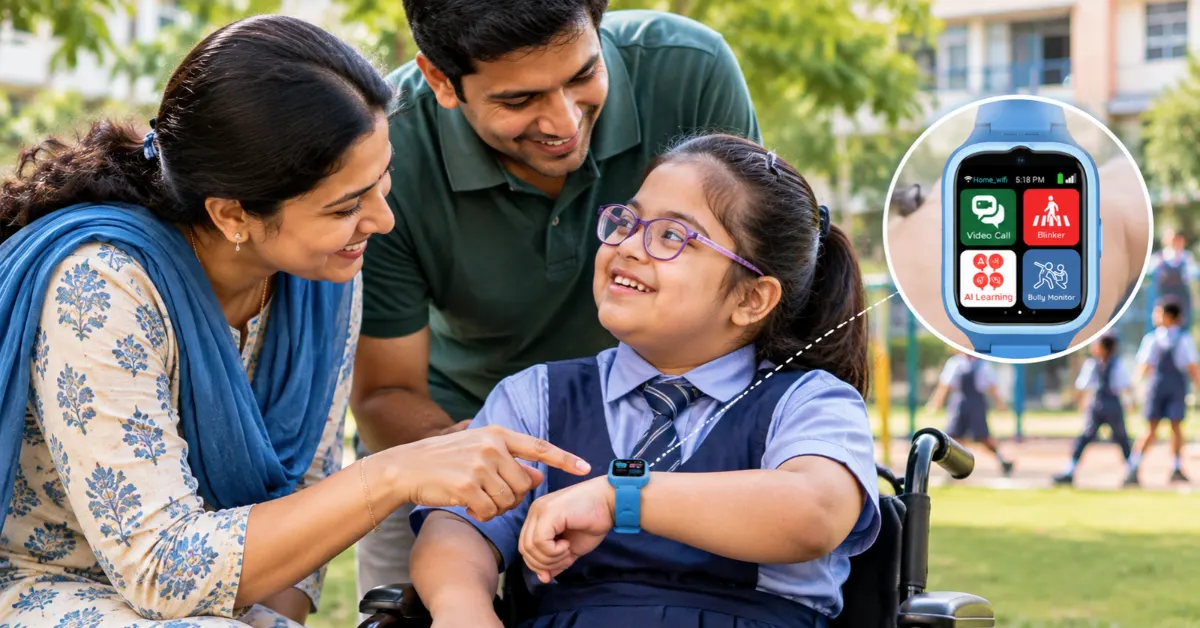
All children should have learning, communication and exploration opportunities. However, safety,
communication and everyday activities can present additional challenges for specially-abled
children. WachMe smartwatch combines wearable safety features and accessible communication to
provide families with a means to be connected while promoting independence.
What Everyday Challenges Do Specially-Abled Children Face?
Safety Challenges
A number of children with special needs may wander away, be unaware of dangers or find it difficult
to ask for help. Children with particular difficulties in mobility are also at risk of falling too.
Communication Challenges
Speech difficulties, language barriers or limited touchscreen control can make everyday
communication challenging. It may be difficult for the child to locate contacts and answer calls when
assistance is not available.
Independence Challenges
Children with disabilities may have difficulty communicating, adapting to new environments and
performing daily tasks. Parents may be reluctant to encourage outdoor activities.
Why Conventional Smartphones May Not Be Suitable for Every Specially-Abled Child
There may be wide-ranging advantages of using smartphones, however, children with special needs
may struggle to operate them due to disabilities or preferences. Due to the multiple steps, small
controls and having to carry a separate device, difficulties in using a mobile phone may occur.
Complicated Interfaces and Navigation
Small icons, applications, menus and touch gestures can make using a smartphone difficult. In
relation to children who rely on simplified interaction requirements, finding key functions on the
phone may be difficult.
Dependence on Manual Call Operations
The smartphone requires manually answering an incoming call by swiping to unlock the device,
locating and selecting the answer function. This may be challenging for children with motor or
cognitive difficulties.
Difficulty Carrying and Managing a Phone
Children with special needs may have difficulty remembering, misplacing or carrying a smartphone.
The features can be easily managed by using the wearable, so it is no longer necessary to manage a
mobile phone.
Unwanted Calls and Communication Risks
Children may be unsure who is calling, or whether to take the call. By managing who they can get in
touch with, parents can help reduce this risk.
How WachMe Smartwatch Supports Safety for Children with Disabilities
Real-Time Location Tracking
WachMe combines GPS, cellular and Wi-Fi-assisted location information through its proprietary
tracking algorithm. Parents or carers with pre-authorisation can view the location information on the
family dashboard while the child is at school, therapy sessions or outings. Depending on the network
and environmental conditions accuracy and update frequency may vary.
Geofencing to Monitor Designated Safe Areas
A virtual boundary around locations such as home or school can be created by parents. WachMe can
send notifications when the device crosses a configured boundary. By setting multiple zones and
being able to make temporary adjustments, families can easily stay informed about planned
activities and any changes in routine.
SOS Alerts for Emergency Communication
During an emergency situation the on-device SOS can be used to send an alert to nominated people
in the family. By eliminating the hassle of navigating multiple device functions direct communication
is possible in urgent circumstances
Fall Detection for Additional Safety Monitoring
WachMe offers different detection approaches depending on wearing position:
– Waist-based detection: It uses angle-based algorithms to monitor changes in body orientation and
identify certain fall patterns.
– Wrist-based detection: It uses impact and motion sensors to identify certain sudden movements
and impacts. Everyday movement may occasionally trigger false alerts.
Wearing the device correctly is very important. Fall monitoring cannot be guaranteed to detect all
falls and should not replace medical supervision.
Environmental Monitoring and Remote Imaging
WachMe can support environmental monitoring and remote imaging. This could be useful for
families to get additional context from surrounding sounds or approved images. Careful
consideration should be given to data protection, consent, limited access and legal requirements
around recording.
How WachMe Makes Communication Easier for Specially-Abled Children
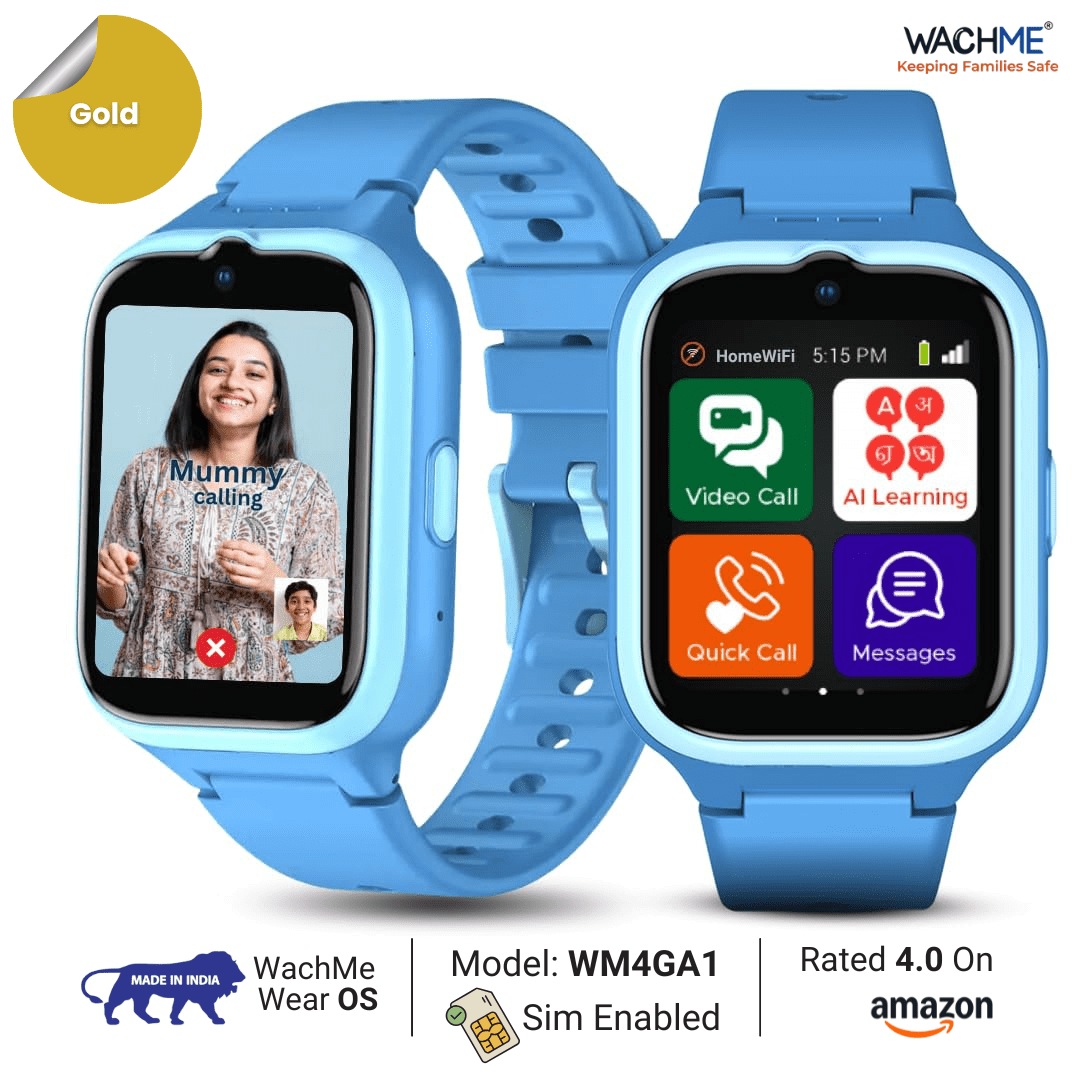
Voice and Video Calling
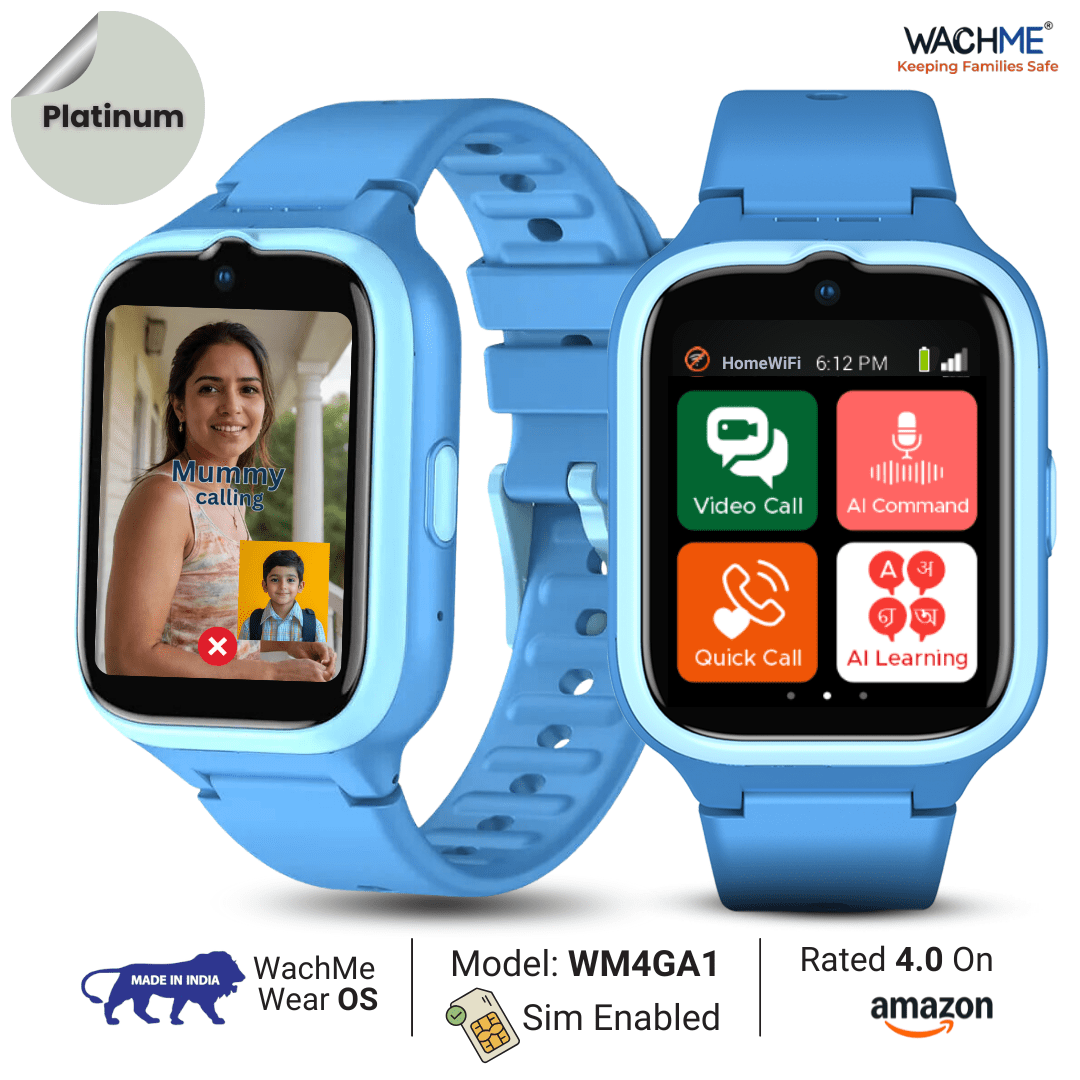
WachMe supports two-way voice and video calling, allowing children and family members to
communicate during daily activities. Incoming calls can be answered automatically, reducing the
need for children to locate and operate call controls. The available communication method can
depend on the child’s comfort and ability to use the device
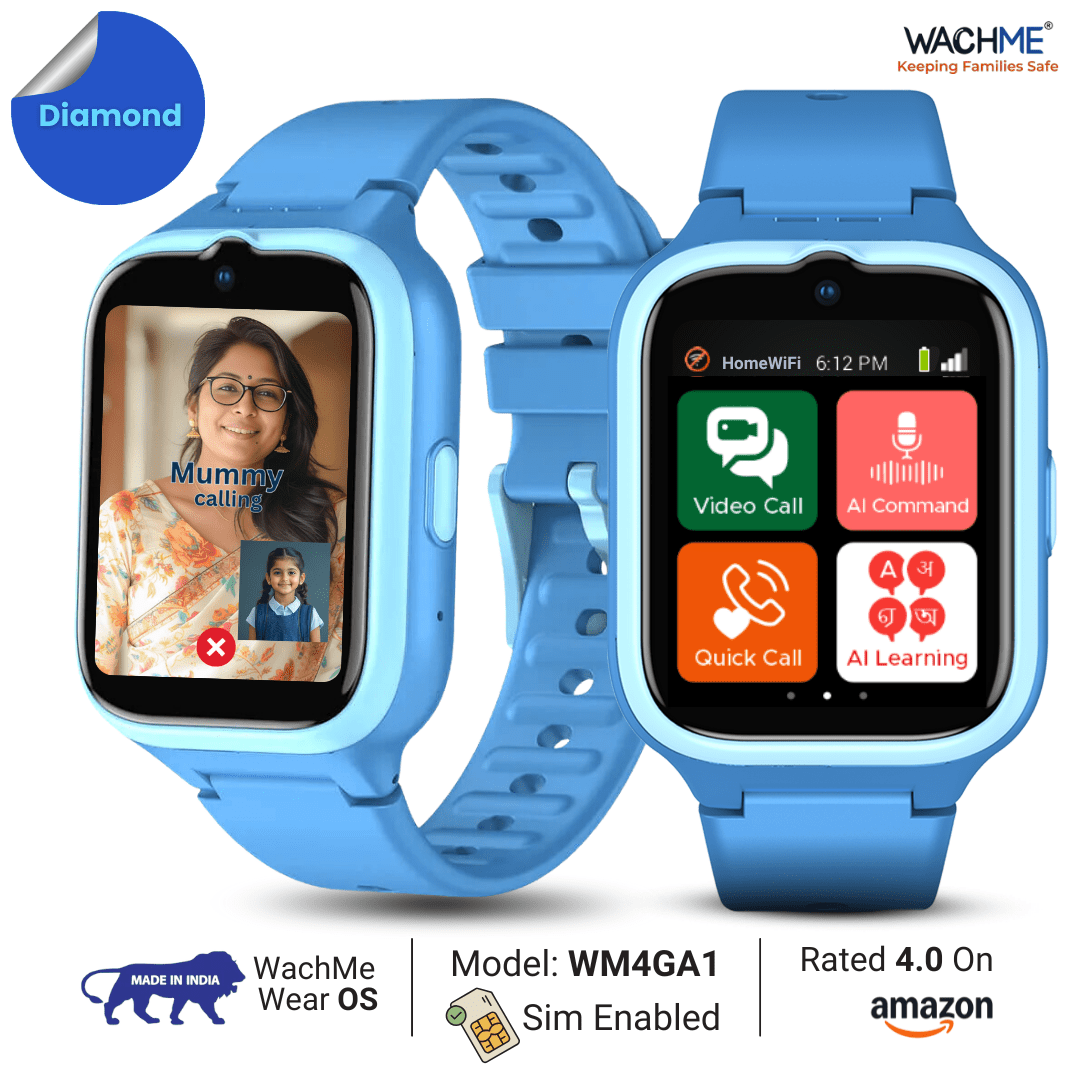
Bhashini-Powered AI Voice Commands
WachMe uses Bhashini-powered voice commands to activate supported functions. Examples include
asking the device to call a family member or activate other supported functions through spoken
instructions. This feature is most useful when a child can understand and use the supported spoken
instructions.
Approved Contacts and Unknown Call Rejection
Parents can add authorised family members and manage contacts remotely. Restricting
communication to approved numbers helps children connect with familiar people without needing
to manage an unrestricted contact list. Calls from unsaved numbers can be rejected, helping reduce
unwanted interruptions.
How WachMe Supports Greater Independence in Everyday Activities
Simple Interface for Easier Everyday Operation
A simplified interface can make essential functions easier to access than a conventional smartphone.
This may reduce navigation difficulties for children who benefit from fewer steps and clearer device
interactions.
UPI Integration for Digital Payments
WachMe includes UPI payment integration, with family-managed spending limits and transaction
controls. This may support small purchases for children who can use digital payments appropriately.
It remains an optional capability, not a requirement for independence.
Spiritual Content for Daily Routines
Additional content includes bhajans, scriptures, prayers, meditation sessions and festival calendars.
These options provide lifestyle and personal-interest value alongside the device’s main safety and
communication functions.
WachMe’s Setup, Parental Controls and Ongoing Support
A wearable device should be easy for families to introduce and manage. Proper configuration helps
ensure that its available functions reflect the child’s requirements and the family’s preferences.
Setting Up the WachMe Smartwatch
Families can choose professional support or guided installation. The process includes adding
contacts, connecting the family application, configuring location zones and adjusting available fall
detection preferences and sensitivity.
Managing the Device Through Family Monitoring
The family application provides access to available location information, contact management,
safety notifications and device settings. Parents can also monitor battery status to help manage
everyday use.
Ongoing Technical Support and Maintenance
WachMe’s support offering includes technical assistance, software updates, battery-related
notifications and device self-diagnostics.
Buy Online WachMe Smartwatch
Looking for a smartwatch for specially-abled children that combines safety monitoring with
accessible communication? Explore WachMe to understand its features, wearing options and family
controls. You can also get in touch with our team to discuss suitability and available purchase
options before choosing a device.
Conclusion
Every child has different needs, abilities and preferences. The right wearable can provide additional
support without replacing personal care or supervision. WachMe brings safety monitoring, simplified
communication and everyday convenience together, helping families stay connected while
supporting children’s participation and assisted independence.
FAQs
1. What is a Smartwatch for special needs children?
It is a wearable device offering selected communication, location and safety functions to support
children who need additional assistance.
2. Is an Assistive smartwatch for disabled kids suitable for every disability?
Suitability depends on the child’s communication abilities, sensory preferences, mobility, comfort
and individual support requirements.
3. What makes a Smartwatch for differently-abled children different?
It focuses on accessible interaction and additional support rather than assuming every child can
operate conventional digital devices.
4. Is a Safety smartwatch for special children a replacement for supervision?
A safety smartwatch provides additional monitoring and communication tools but cannot replace
responsible caregiving, supervision or emergency services.
5. How does Wearable technology for special needs kids support parents?
It can provide location information, configured alerts and controlled communication, helping
families stay informed during everyday activities.