Modern organisations face two growing challenges: accurately tracking attendance and ensuring staff safety. Traditional tools such as registers, ID cards, CCTV systems, walkie-talkies and personal smartphones often fail to provide complete workforce visibility.
Smart wearable technology is emerging as a practical solution that combines attendance tracking, staff communication, emergency response, and workforce monitoring into a single connected platform.
Why Traditional Attendance Systems Fail in Large and Dynamic Workplaces
Attendance management appears simple on paper. However, for schools, hospitals, manufacturing facilities and large corporate campuses, it remains one of the most difficult workforce management challenges.
Buddy Punching
Buddy punching occurs when one employee records attendance on behalf of another. This issue remains common in workplaces that rely on cards, biometric systems at fixed locations or manual attendance processes. It creates inaccurate workforce records and reduces accountability.
Proxy Attendance
Many organisations continue to struggle with proxy attendance. Staff may be marked present despite arriving late, leaving early or being absent altogether. Traditional attendance systems often record an entry event rather than confirming actual workplace presence.
Delayed Attendance Records
Attendance data frequently reaches managers hours or days after the event. This delay makes it difficult to identify staffing shortages, investigate discrepancies or respond quickly when operational requirements change during the day.
Manual Verification
Human intervention is often required to validate attendance records. HR teams spend significant time reviewing registers, correcting errors and investigating disputes. This administrative burden increases costs and reduces operational efficiency.
Employees Moving Across Multiple Locations
Modern employees rarely remain in one location throughout the day. Nurses move between wards, teachers work across multiple buildings and maintenance teams operate throughout large campuses. Traditional systems struggle to accurately track workforce movement.
Inability to Verify Actual Staff Presence
A person may clock in successfully yet remain absent from their assigned work area. Attendance systems often verify entry to a building but cannot confirm presence within operational zones where staff are expected to perform their duties.
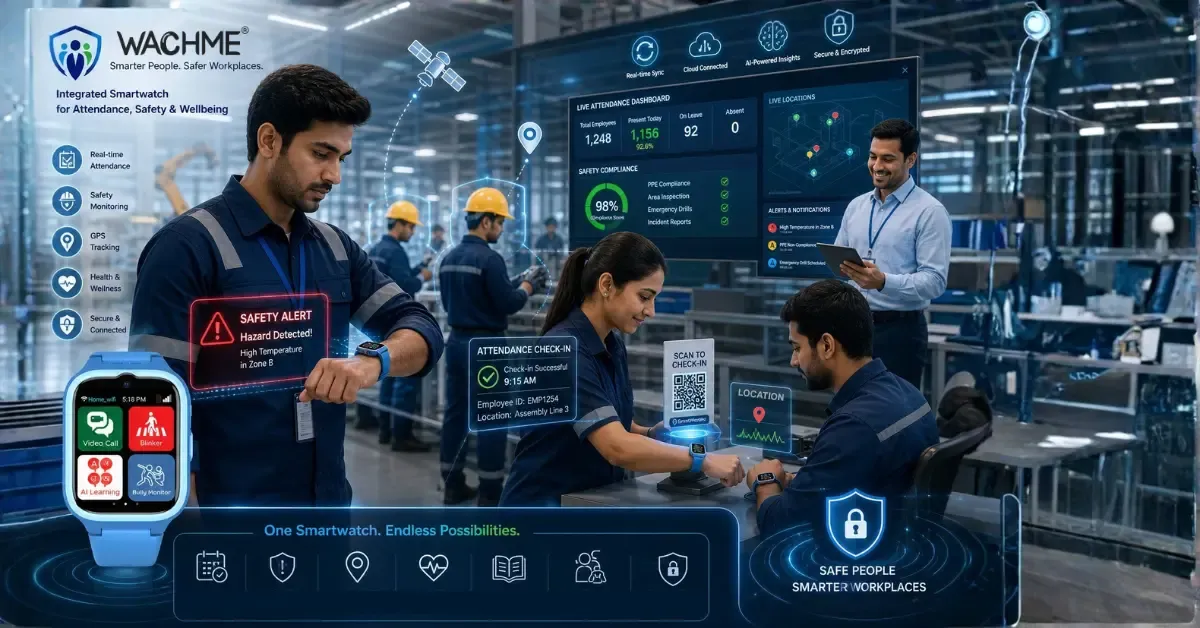
Solutions such as WachMe smartwatch help organisations move beyond attendance recording towards attendance validation. By combining indoor location tracking, workforce visibility and attendance automation, organisations gain greater confidence that attendance records reflect real operational activity.
The Hidden Safety Risks Organisations Cannot See Through CCTV Alone
Many organisations invest heavily in CCTV systems. Cameras play an important role in workplace security, but they cannot provide complete workforce protection.
Blind Spots
Every CCTV system contains blind spots. Corridors, storage rooms, stairwells and service areas often remain partially uncovered. Incidents occurring in these locations may go unnoticed until significant time has passed.
Staff Working Behind Walls
Cameras cannot track employees through walls or inside enclosed spaces. Healthcare workers, maintenance staff and security personnel frequently operate in locations where direct visual monitoring is impossible.
Multi-Floor Buildings
Large buildings create complex visibility challenges. Managers may know that staff entered a facility but remain unable to determine their exact location across multiple floors and departments.
Isolated Work Zones
Factories, warehouses and educational campuses often contain isolated zones where staff work independently. These environments increase risk because assistance may not be immediately available when incidents occur.
Employees Working Alone
Lone workers face increased safety risks. Security personnel, maintenance engineers, laboratory staff and healthcare professionals frequently perform duties without direct supervision. Delays in identifying emergencies can significantly increase risk exposure.
Restricted Areas
Many organisations operate restricted areas containing sensitive equipment, confidential information or hazardous materials. Traditional monitoring tools often struggle to provide real-time visibility into unauthorised movement or access violations.
Advanced wearable technology in WachMe supports this shift through indoor and outdoor location tracking. By combining GPS, Wi-Fi-based positioning and workforce monitoring technologies, organisations gain visibility that traditional CCTV systems cannot provide alone.
Why Emergency Response Often Fails During the First Few Critical Minutes
In most workplace emergencies, the first few minutes determine the outcome. Unfortunately, many organisations still rely on communication methods that introduce delays during critical situations.
Nurse Assaulted by a Patient
Healthcare environments can be unpredictable. A nurse facing aggression may not have immediate access to a telephone or nearby assistance. Delays in requesting help can place both staff and patients at risk.
Factory Worker Injured
Industrial environments contain numerous hazards. When an employee suffers an injury, supervisors need immediate awareness of both the incident and the worker’s exact location. Traditional reporting channels often slow the response process.
School Security Incident
Educational institutions must respond quickly to security incidents involving staff, visitors or students. Delayed communication can increase confusion and reduce the effectiveness of emergency protocols.
Staff Medical Emergency
Heart attacks, falls and sudden medical emergencies can occur without warning. If colleagues are unaware of the situation, valuable response time may be lost before assistance arrives.
Fire Evacuation Challenges
During evacuations, organisations must account for personnel quickly. Traditional attendance systems rarely provide real-time information about staff locations once an emergency begins.
Solutions such as WachMe support faster emergency response by combining wearable communication, workforce visibility and location intelligence within a single platform.
For organisations operating hospitals, schools, manufacturing facilities and large campuses, this capability can significantly improve incident management and staff protection.
The Growing Risk of Using Personal Smartphones for Workplace Communication
For many organisations, personal smartphones have become unofficial workplace communication tools. While convenient, they introduce significant operational and security risks.
Data Leakage
Employees frequently access work information on personal devices. Documents, messages and sensitive organisational data may be stored outside approved systems, increasing the risk of accidental or intentional data exposure.
Social Media Distractions
Personal smartphones contain social media applications, entertainment platforms and non-work services that can reduce productivity and create distractions during working hours.
Uncontrolled Communication
Managers often have limited visibility into conversations occurring through personal messaging applications. This makes communication monitoring, auditing and compliance significantly more difficult.
Sensitive Information Sharing
Healthcare providers, educational institutions and industrial organisations frequently handle confidential information. Uncontrolled sharing through personal devices can create legal, operational and reputational risks.
Unauthorized Photography
Many workplaces restrict photography due to privacy, security or intellectual property concerns. Personal smartphones make enforcement difficult and increase the risk of unauthorised image capture.
Compliance Concerns
Industries subject to regulatory requirements must maintain clear communication records and data controls. Personal devices can complicate compliance efforts and increase audit challenges.
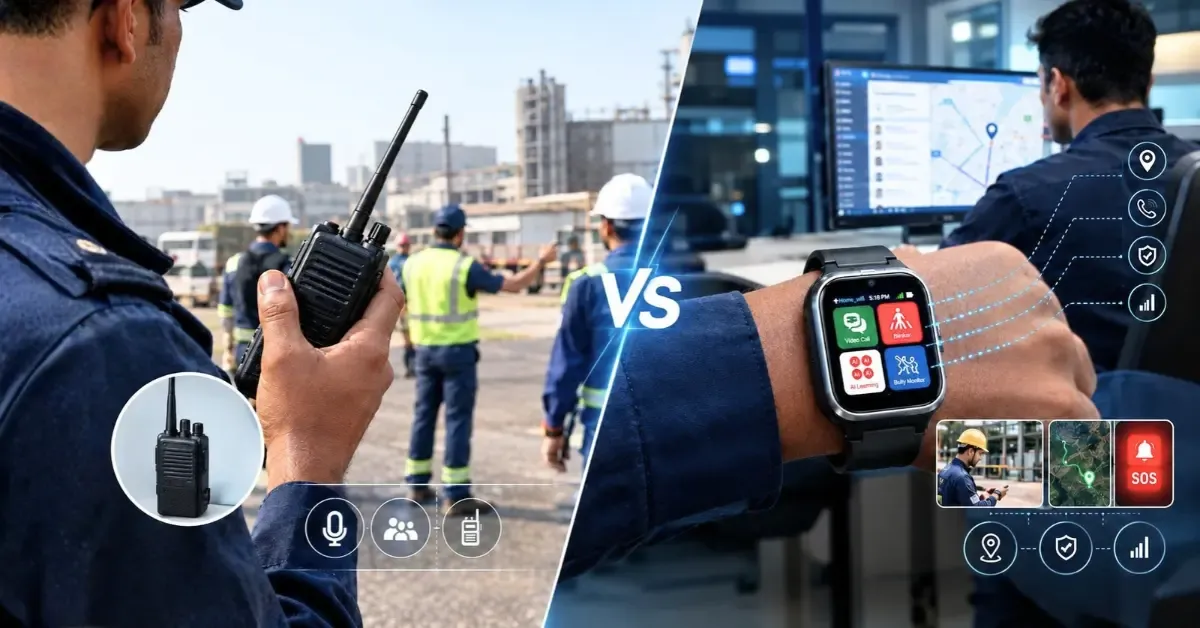
WachMe is designed specifically for workplace communication rather than consumer use. This allows organisations to maintain operational connectivity while reducing many of the risks associated with personal smartphone usage.
Why Many Organisations Are Moving Beyond RFID-Based Attendance Systems
RFID attendance systems helped organisations move away from manual registers and paper-based tracking. They improved attendance automation and reduced administrative work. However, as workplace safety, workforce visibility and operational accountability become more important, many organisations are finding that RFID systems only solve part of the problem.
| Area |
RFID Attendance Systems |
Smart Wearable Platforms Like WachMe |
| Attendance Tracking |
Yes |
Yes |
| Automatic Attendance |
Yes |
Yes |
| Real-Time Staff Location |
No |
Yes |
| Indoor Location Visibility |
No |
Yes |
| Emergency SOS Support |
No |
Yes |
| Staff Communication |
No |
Yes |
| Restricted Zone Monitoring |
Limited |
Yes |
| Lone Worker Safety |
No |
Yes |
| Workforce Analytics |
Limited |
Advanced |
| Emergency Response Support |
No |
Yes |
| Multi-Purpose Device |
No |
Yes |
| Data Security Controls |
Limited |
Advanced |
RFID is effective for attendance automation but was not designed to address workforce visibility, communication and employee safety challenges.
What Organisations Should Evaluate Before Investing in a Workforce Wearable Solution
As wearable technology adoption grows, organisations should carefully evaluate available solutions. Not all workforce wearables deliver the same capabilities.
Indoor Tracking
Many solutions advertise location tracking but rely primarily on GPS. GPS performs well outdoors but struggles inside buildings. Organisations should prioritise platforms that provide accurate indoor positioning for hospitals, schools, offices and manufacturing facilities.
Outdoor Tracking
Employees often move between buildings, campuses and field locations. Reliable outdoor tracking helps organisations maintain visibility beyond facility boundaries while supporting workforce safety initiatives.
SOS Functionality
Emergency assistance should be simple and immediate. A workforce wearable should allow staff to trigger alerts quickly while automatically sharing location information with authorised personnel.
Attendance Automation
Modern attendance systems should reduce administrative effort. Automated attendance verification based on workplace presence can improve accuracy while reducing disputes and manual intervention.
Data Protection
Workforce data is highly sensitive. Organisations should assess how information is stored, transmitted and protected. Strong access controls and secure communication channels are essential.
Role-Based Access
Different employees require different permissions. Administrators, supervisors and staff should only access information relevant to their responsibilities.
Secure Communication
Communication tools should support workplace operations while reducing distractions and security risks. Controlled communication environments are increasingly important in regulated sectors.
Reporting and Analytics
Decision-makers need actionable information. Reporting capabilities should provide visibility into attendance trends, safety incidents, workforce movement and operational performance.
Scalability
A solution should support future growth. Whether an organisation employs fifty people or several thousand, the platform should scale without creating additional complexity.
Selecting a workforce wearable should focus on solving business challenges rather than simply adopting new technology.
How Different Industries Are Addressing Attendance and Safety Challenges
Healthcare
Healthcare organisations operate in fast-moving environments where staff availability and response times directly affect patient care.
Nurse safety has become a growing concern globally. Healthcare workers often encounter aggressive behaviour, isolated work situations and emergency incidents. Real-time assistance tools help improve protection and response capabilities.
Shift tracking remains another challenge. Hospitals operate around the clock, making accurate attendance and workforce visibility essential for operational continuity.
Emergency coordination requires rapid communication. Knowing which staff members are nearest to an incident can significantly improve response effectiveness.
Schools and Educational Institutions
Educational institutions manage large campuses with hundreds or thousands of students and staff.
Campus security remains a major priority. School leaders need better visibility into staff locations during normal operations and emergencies.
Staff accountability is increasingly important. Administrators must ensure that teachers, security personnel and support staff are present in designated areas throughout the day.
Emergency response planning continues to evolve. Schools require systems that support rapid communication and workforce coordination during security incidents, evacuations or medical emergencies.
Manufacturing and Industrial Facilities
Industrial environments present unique workforce management challenges.
Worker safety remains a top concern. Manufacturing sites often contain hazardous equipment, heavy machinery and restricted zones.
Monitoring access to restricted areas helps reduce safety risks and supports compliance requirements.
Shift attendance is critical for production planning. Accurate workforce visibility allows managers to respond quickly to staffing gaps and operational disruptions.
Corporate Campuses
Large corporate environments increasingly require workforce visibility solutions.
Employees frequently move between offices, meeting rooms and departments. Managers need better awareness of workforce activity without creating intrusive monitoring practices.
Access control remains an important security consideration. Organisations must ensure that staff and visitors remain within authorised areas.
Visitor management also benefits from improved workforce coordination. Real-time staff visibility can streamline guest assistance and facility operations.
How WachMe Helps Organisations Build Safer, More Accountable, and Better Connected Workplaces
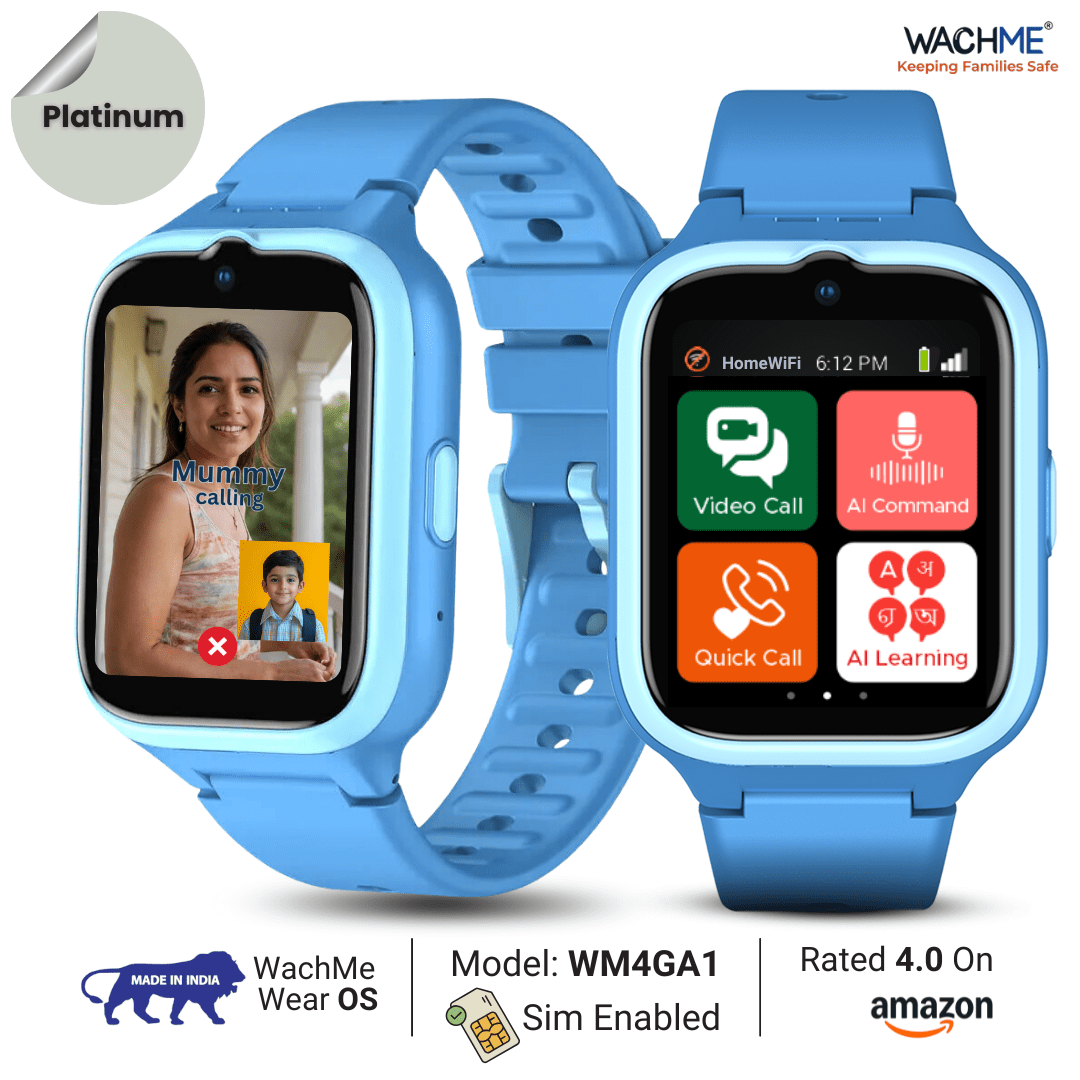
WachMe is designed as a workforce safety, communication and visibility platform rather than simply a smartwatch. Its purpose is to address operational challenges that traditional tools struggle to solve.
Attendance
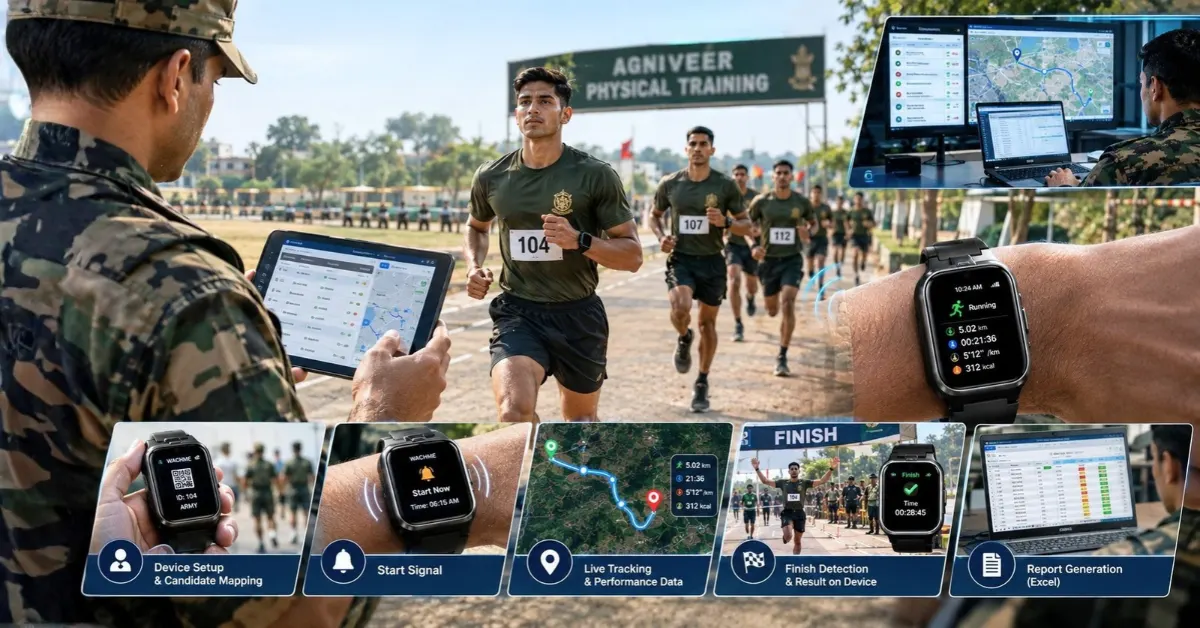
Attendance management becomes more reliable through automated clock-in processes and location validation. Rather than relying solely on manual entries or fixed checkpoints, attendance records can reflect actual workplace presence.
Safety
Workplace safety improves through SOS functionality and emergency alert capabilities. Employees can quickly request assistance while providing location information that supports faster response.
Visibility
Real-time workforce visibility helps organisations understand where staff are located across indoor and outdoor environments. This capability supports operational planning, emergency management and workforce accountability.
Communication
Controlled messaging and voice alerts help organisations maintain effective communication without relying entirely on personal smartphones. This approach can improve responsiveness while reducing communication gaps.
Security
Security controls are increasingly important in modern workplaces. Features such as approved contact lists, restricted access to social media and secure device architecture help organisations reduce data leakage risks.
Management
Centralised dashboards, reporting tools and workforce analytics provide decision-makers with a clearer understanding of attendance, communication and safety performance across their organisation.
By combining these capabilities into a single platform, organisations can reduce dependence on multiple disconnected systems while improving operational visibility.
Book WachMe Wearable Technology Demo at Your Organisation
Understanding workforce wearable technology is easier when experienced in a real workplace environment. The WachMe team can visit your organisation, assess operational requirements and demonstrate how wearable workforce management technology supports attendance tracking, staff safety, emergency response and secure communication.
Contact us today to arrange a personalised demonstration and explore practical use cases relevant to your workplace.
Conclusion
Modern workplace challenges extend far beyond simple attendance tracking. Organisations must protect staff, improve communication, respond quickly to emergencies and maintain visibility across increasingly complex environments.
As workplace expectations continue to evolve, integrated workforce safety and communication platforms such as WachMe represent an important step towards safer, more connected and more accountable workplaces.
Read More:
How Wearable Tech Can Help in Minimizing Paper Leaks? WachMe Advantage & Features
WachMe Smart Wearable for Hotel Staff Communication & Security: Features and Advantages
Frequently Asked Questions
1. Is WachMe a smartwatch or a workforce management platform?
WachMe functions as a workforce safety and communication wearable device delivered through wearable technology, supporting attendance, security and workforce visibility.
2. How does WachMe support workplace safety?
WachMe provides SOS alerts, location visibility and emergency communication features that help organisations respond faster to incidents.
3. Is WachMe suitable for schools?
Yes. Educational institutions can use WachMe to improve campus security, staff accountability and emergency response coordination.
4. Can hospitals benefit from WachMe?
Healthcare organisations use workforce visibility, nurse safety and emergency communication capabilities to support daily operations and staff protection.
5. Does WachMe help reduce reliance on personal smartphones?
Yes. WachMe provides controlled workplace communication that helps organisations reduce risks associated with personal mobile device usage.