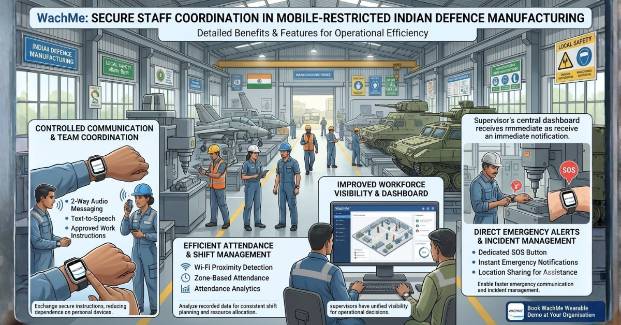
Research facilities operate under controlled conditions where confidentiality and precision are essential. From pharmaceutical laboratories to biotechnology research centres, all employees must adhere to strict protocols while carrying out complex tasks. Handling day-to-day operations becomes increasingly difficult when personal smartphones are restricted and coordination among teams is required.
What Makes Staff Management Challenging in Research Facilities?
The research facilities comprise of pharmaceutical labs, biotechnology facilities, research departments in universities, and research and development units in industries. Such environments consist of researchers, lab technicians, equipment experts, and security officials handling confidential materials, specialised equipment, and sensitive information.
However, unlike other conventional offices, research laboratories require communication among staff without interfering with the experimental process or violating lab procedures. The restriction on the use of smartphones poses another problem since the employees cannot always rely on familiar messaging applications or personal devices to receive instructions.
The manager needs to balance the following three aspects: maintaining research confidentiality, ensuring the safety of staff members and organising research activities.
Key Staff Management Challenges in Mobile-Restricted Research Facilities
-
Communicating Without Personal Smartphones
The research facilities may prohibit personal mobile phones in order to prevent unauthorised photography and information leaks. Nonetheless, the supervisor will still have to contact technicians, share changes to work schedules and communicate urgent instructions.
In the absence of an authorised alternative, the team may have to rely on fixed-line telephones or send messengers from one department to another. Such communication methods may lead to delays, especially if the personnel are working in different buildings or laboratory zones.
-
Coordinating Staff Across Restricted Laboratory Zones
Different research areas can have their own access permits because they contain confidential projects, specialised equipment or hazardous materials. The supervisors need to coordinate their employees without giving them unnecessary access to these sensitive zones.
Managers can find it difficult to determine the location of their employees when they switch labs or provide assistance. Location tracking can help enhance visibility among the workforce; however, it is not meant to be a substitute for the access control system or independently prevent unauthorised entry.
-
Responding to Laboratory Emergencies
Communication between laboratory personnel and designated responders is critical during chemical spills, machinery malfunction and medical emergencies in the laboratory. Restrictions on the use of smartphones may make it difficult for staff to communicate with their supervisors, especially if they are using equipment or are wearing protective gloves.
The delay in delivering the message may make the response process difficult and make the supervisors uncertain as to where assistance is required. In research laboratories, it is essential to have an approved mode of communication that would enable the staff to raise an alert without having to rely on their personal phones.
-
Maintaining Accurate Shift Handovers
There are some experiments that require continuous observation and even monitoring in special environmental conditions for more than one working shift. Incoming staff should be informed about the tasks that remain unfinished, equipment status and the problems in operation pointed out by the outgoing team.
Without smartphones, employees might be overly dependent on written logs or face-to-face handovers. Even as these continue to play an important role, the inability to reliably communicate any critical updates to workers becomes increasingly problematic as shifts change hands.
-
Protecting Confidential Research Information
Research laboratories could be working with unpublished discoveries, proprietary testing procedures and commercially sensitive project information. Having unrestricted access to personal devices in this environment can be risky in terms of photography, messaging applications, and unauthorized transfer of data.
However, restrictions on all forms of mobile communication pose a challenge for employees who must receive legitimate instructions regarding their work. The facility needs a way of ensuring that there are necessary communications in the workplace without unnecessary functionality of the devices.
-
Coordinating Contractors and Technical Specialists
Maintenance technicians, calibration specialists and outside service personnel are common personnel requirements for research facilities. Such individuals might need temporary access to restricted work locations but do not necessarily require unrestricted access to the entire lab facility.
The supervisors have to ensure that they convey job instructions, synchronise arrival times, and know where the assigned personnel are working. Manually managing all these functions will make it difficult for the management to ensure visibility over various departments.
How Wearable Technology Can Help Research Facilities Manage Staff
Employer-controlled wearables offer an alternative to personal smartphones by providing selected communication and workforce management functions through dedicated devices. Their usefulness depends on the facility’s security requirements, network infrastructure and operating procedures.
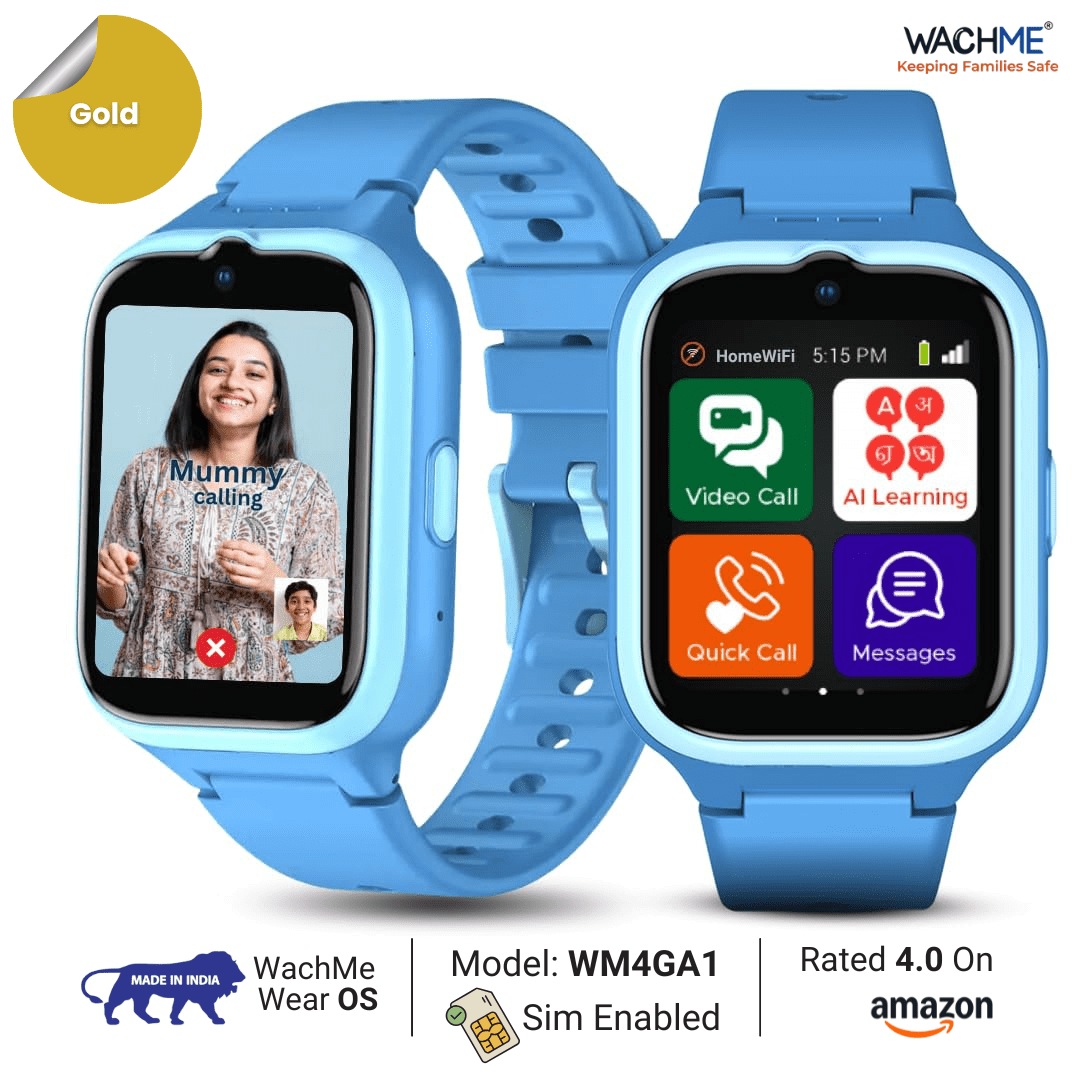
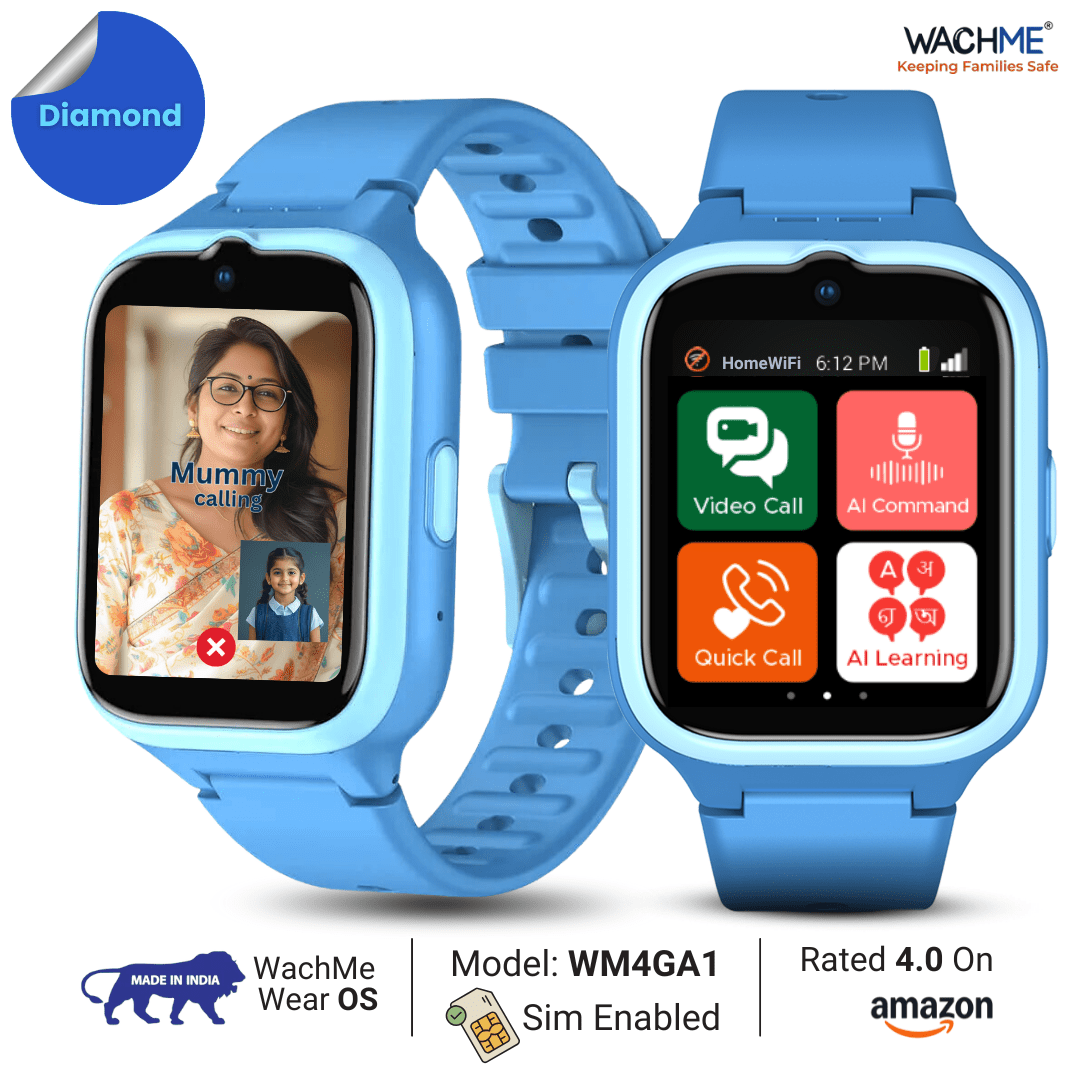
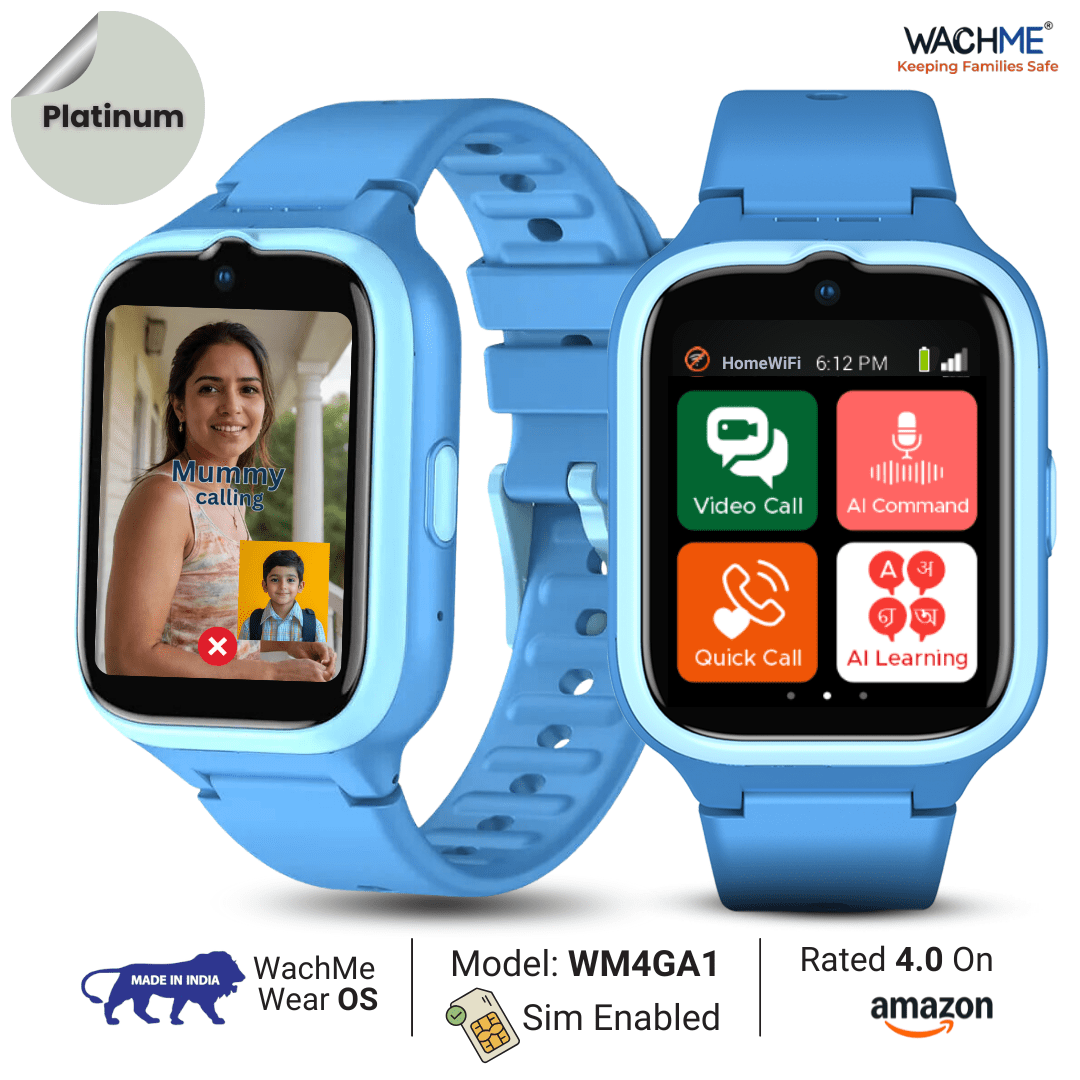
WachMe is the first Made-in-India smart wearable device designed and developed by IIT alumni with its own Wear OS. Its capabilities can support several workforce management requirements in mobile-restricted research environments.
-
Enabling Controlled Workplace Communication
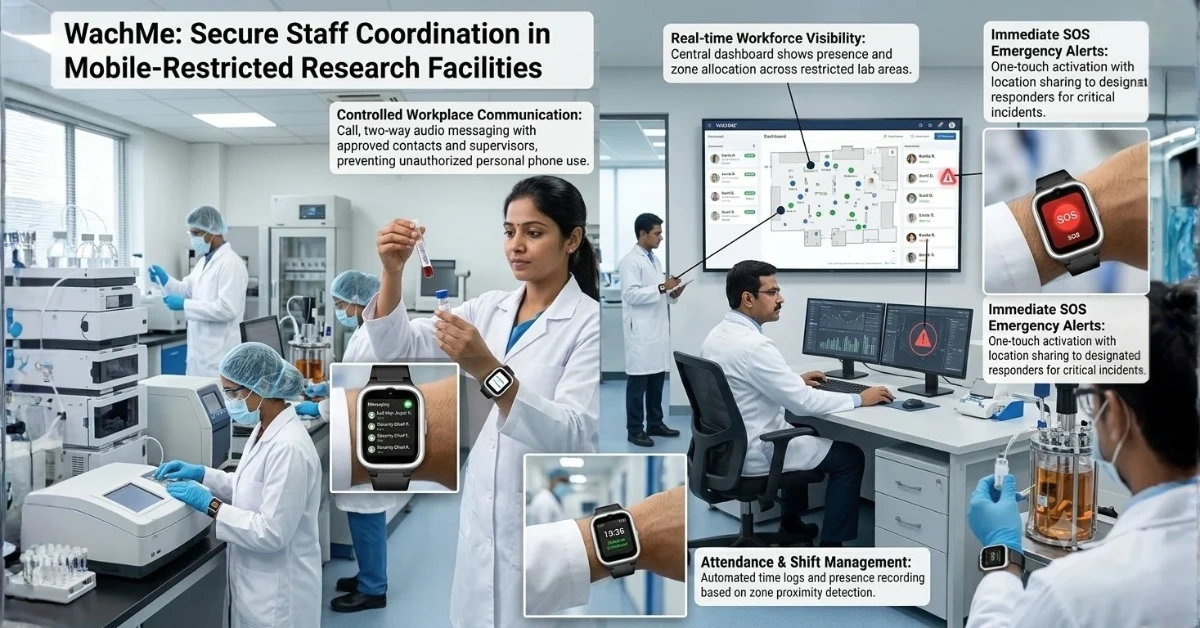
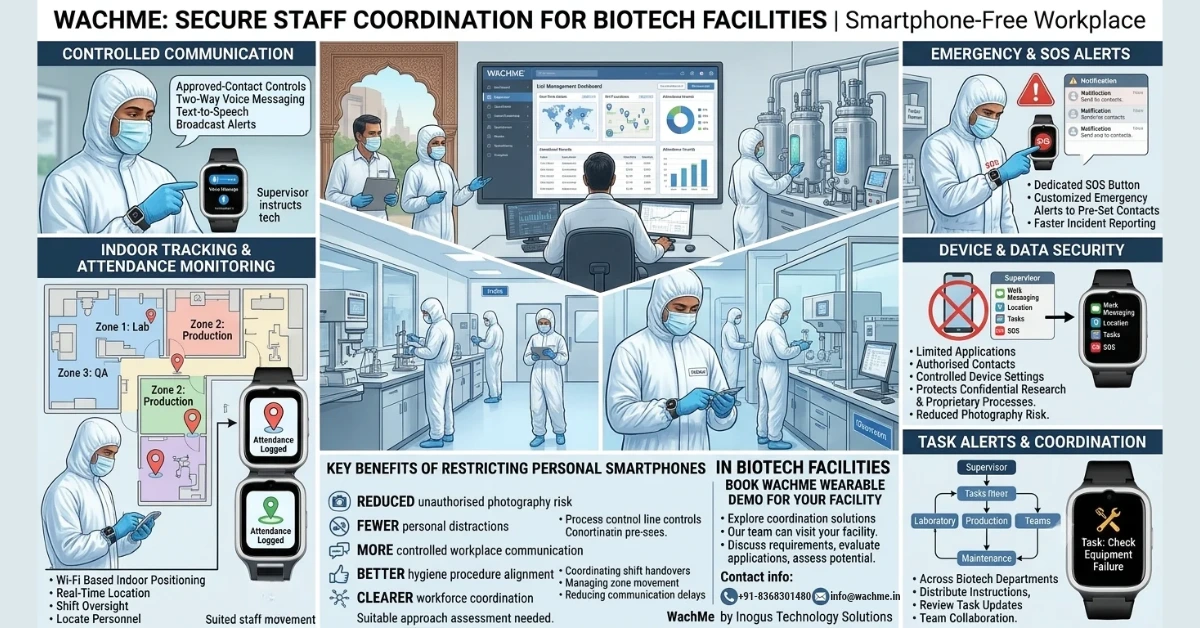
WachMe supports communication through approved contacts, text-to-speech messaging, two-way voice messaging and text or speech broadcasts. These enable the supervisors to give instructions in the workplace without forcing the employees to utilize personal communication applications.
It is important for the facilities to set up their communication permissions based on their confidentiality policy and the type of work being performed.
-
Improving Staff Location Visibility
WachMe supports indoor positioning through Wi-Fi infrastructure and outdoor tracking through GPS, location-based services and Wi-Fi integration. Its dashboard provides staff location and status information to authorised supervisors.
However, indoor location accuracy will be affected by how the facility is designed and set up. The location details should help coordinate the workforce rather than serve as proof that an employee has permission to enter a laboratory.
-
Supporting Faster Emergency Communication
WachMe includes an SOS button and emergency notification capabilities. Depending on the configuration, alerts can be sent to designated contacts through supported notification channels, with location information shared to help identify where assistance may be required.
This device should support the existing laboratory emergency procedures, alarm systems, and specialised hazard detection systems. It should not be regarded as a substitute for these.
-
Restricting Unnecessary Device Functions
WachMe’s data security mode allows organisations to restrict approved contacts, limit access to social media and unauthorised applications, and prevent users from changing certain device settings. Its secure two-pin charging system is designed to block folder access when the device is connected to a computer.
These controls can help research facilities separate workplace communication from personal device usage.
-
Organising Staff Attendance and Task Assignments
WachMe supports attendance and time tracking, location-based attendance functions, task notifications and workforce reporting through its management dashboard.
These functions can be utilised by research managers for analysing attendance, distribution of responsibilities, and highlighting outstanding work. This can prove to be particularly effective in scenarios where there are many teams working in different labs or where constant staffing is required.
Benefits and Limitations of Wearable Technology in Research Facilities
Wearable technology can improve staff coordination, but its effectiveness depends on how it is implemented.
Potential benefits include:
- Reducing dependence on personal smartphones for workplace communication.
- Improving visibility of staff across laboratories and research buildings.
- Providing an additional channel for emergency assistance.
- Supporting attendance management and shift coordination.
- Limiting selected device functions to reduce certain information security risks.
Important limitations include:
- Wearables do not independently enforce laboratory entry permissions.
- Location tracking cannot confirm that safety procedures have been followed.
- Device restrictions do not replace comprehensive cybersecurity controls.
- Emergency alerts cannot replace specialist hazard detection or established response procedures.
- Attendance and task management do not replace scientific documentation systems.
Research facilities should evaluate these capabilities against actual operational needs rather than assume that a wearable will resolve every workforce management challenge.
Book a WachMe Wearable Demo at Your Organisation
See how WachMe can support staff coordination in your research facility. Our team will visit your organisation to demonstrate the wearable technology and its workforce management capabilities in a practical setting. Contact us to arrange a demo and explore how WachMe could fit your facility’s operational requirements.
Conclusion
Staff management in the case of restricted research facilities is a careful balancing act between communication, safety, confidentiality and uninterrupted scientific work. Mobile device prohibitions can ensure that sensitive areas are protected; however, they might create additional difficulties when coordinating personnel and dealing with emergencies.
Wearable devices that are employer-controlled, such as WachMe, can serve as an appropriate solution to these communication and workforce visibility challenges. WachMe integrates controlled messaging, location tracking, emergency alerts, attendance and task management within a dedicated wearable device.
For research facilities, the most appropriate approach is to evaluate these capabilities through a controlled pilot, verify compatibility with laboratory protocols and integrate the technology with existing safety and security procedures.
Read More:
Frequently Asked Questions
-
Can wearable technology replace smartphones in research facilities?
Yes, employer-controlled wearables can provide selected workplace communication and workforce management functions without requiring personal smartphones. Their suitability depends on the facility’s communication needs and security policies.
-
How can WachMe help research staff communicate without smartphones?
WachMe supports approved-contact communication, two-way voice messaging, text-to-speech conversion and broadcast alerts. These features help supervisors distribute workplace instructions through a dedicated wearable device.
-
Can WachMe prevent unauthorised access to restricted laboratories?
WachMe supports location tracking and restricted-zone alerts, which can help supervisors monitor staff movement. However, these functions do not physically prevent entry. Door access control and identity verification require appropriate systems and integrations.
-
How can wearables support emergency response in research laboratories?
A wearable with an SOS function can allow staff to request assistance and notify designated contacts. WachMe supports emergency alerts and location sharing, subject to device configuration and connectivity. It should complement established emergency procedures.
-
Is wearable technology suitable for pharmaceutical and biotechnology research facilities?
It may be suitable where facilities need controlled staff communication, location visibility and emergency coordination. Before deployment, organisations should verify device compatibility with hygiene rules, contamination controls, protective equipment and information security requirements.