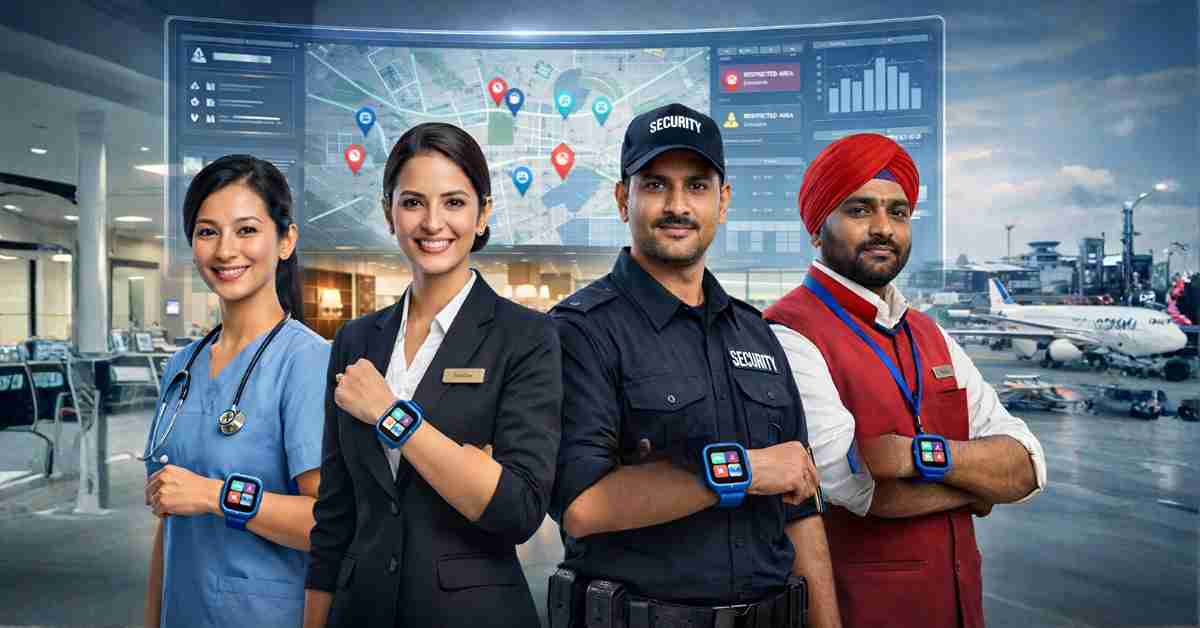
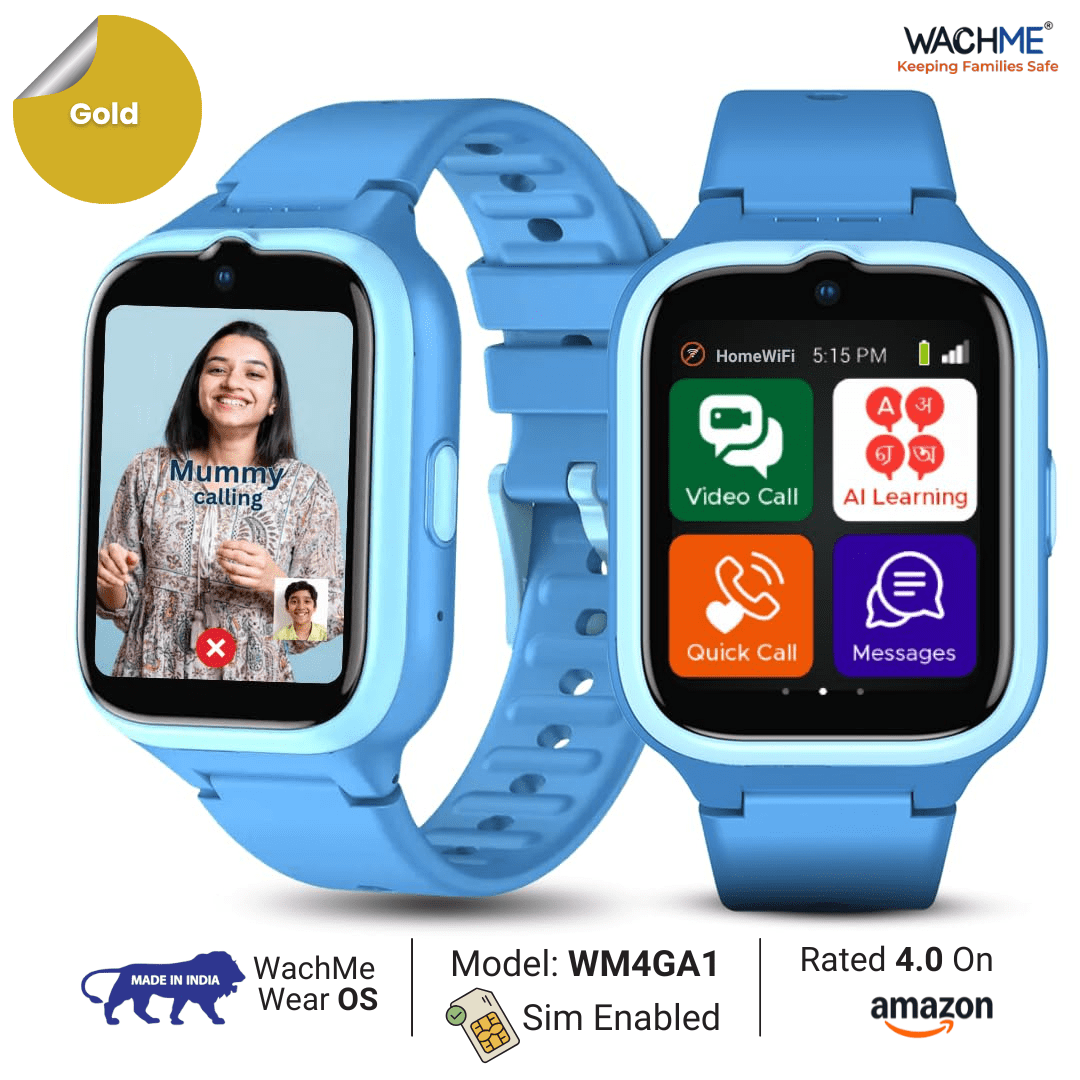
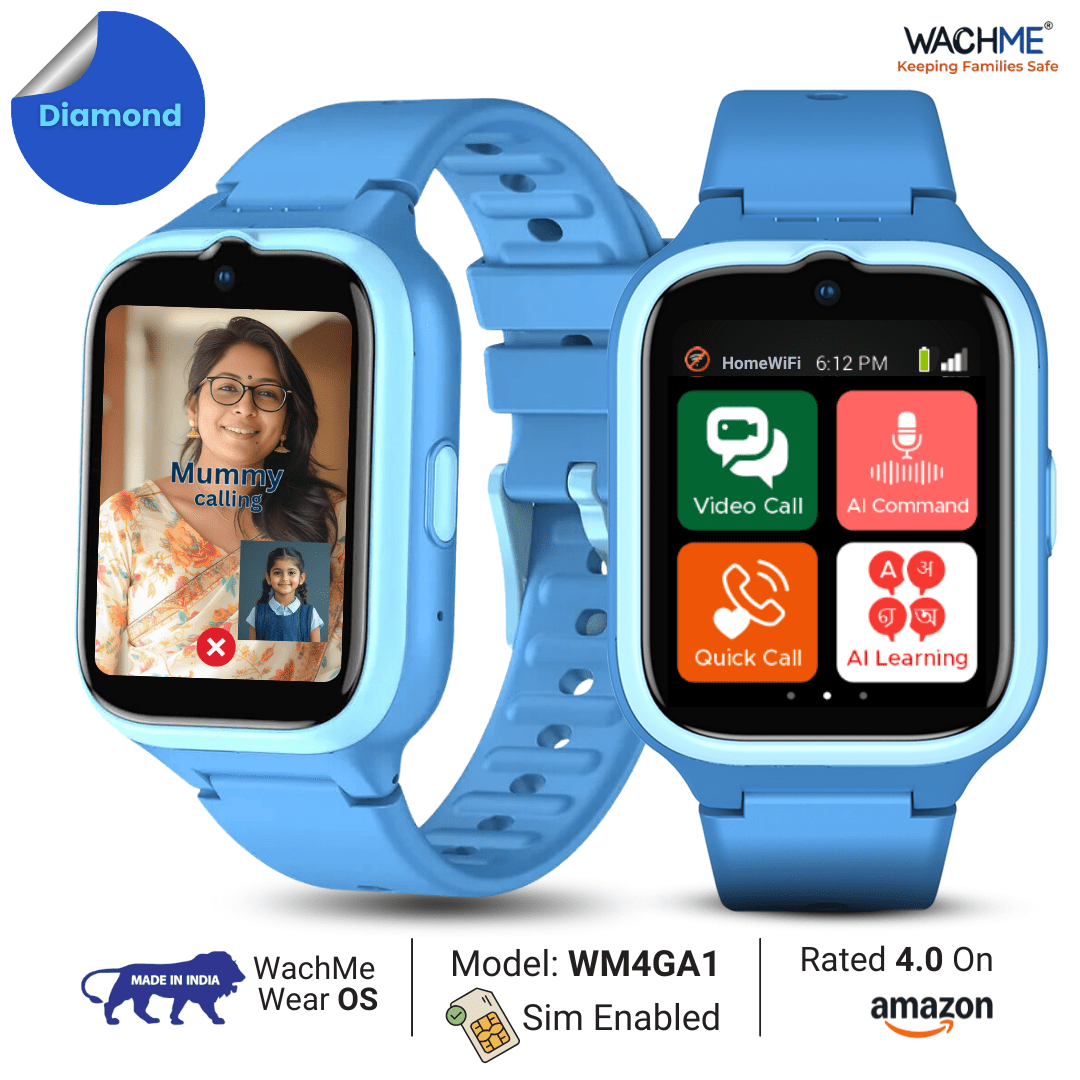
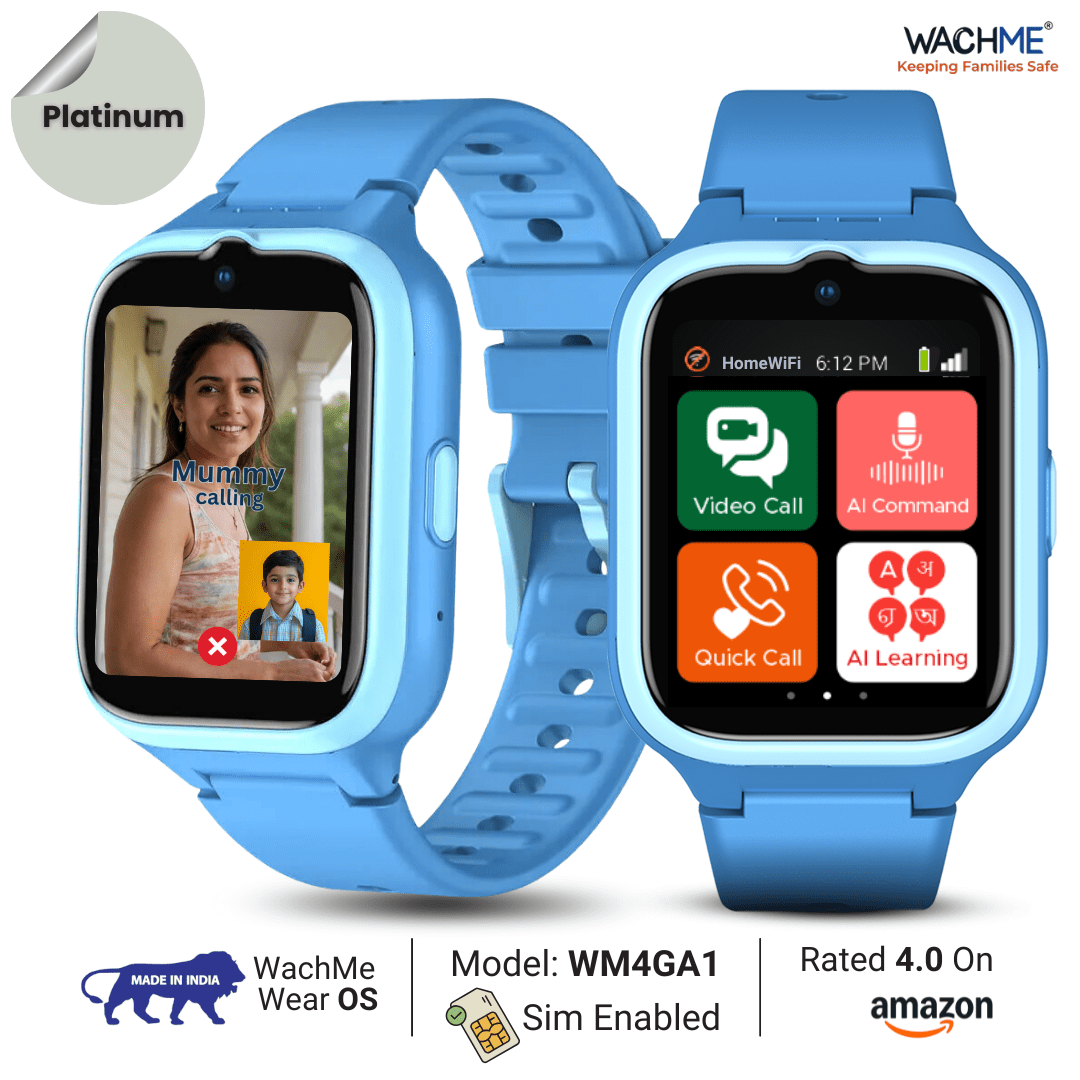
Staff management smartwatch for hospitals, hotels, airports & govt. WachMe offers indoor tracking, controlled communication & data security.
WachMe For Staff Management & Data Security in Hospitals, Hotels, Airports, Govt Installations
Modern organisations face growing pressure to manage staff efficiently while maintaining safety, accountability, and data protection. Traditional tools like CCTV, smartphones, and pagers only solve fragments of this problem. Enterprise wearables introduce a more controlled and intelligent approach. WachMe represents this shift by combining tracking, communication, and security into a single-purpose smartwatch platform.
What is WachMe? A Purpose-Built Wearable Platform for Enterprise Environments
WachMe is not designed and engineered as a controlled enterprise wearable system intended for regulated, security-sensitive, and operationally demanding workplaces. Instead of giving users full device freedom, WachMe follows an employer-governed model where behaviour, communication, and features are centrally managed.
At its core, WachMe functions as:
A dedicated-purpose wearable endpoint connected to a centralised command and policy engine
This design mirrors enterprise mobility management (EMM/MDM) concepts, but adapted specifically for wearable devices.
Technical Composition:
- Hardware Layer – Smartwatch phone form factor, assembled/manufactured in NOIDA
- Operating System – Proprietary WachMe-Wear-OS
- Base System – Built over raw Android / Wear OS derivative
- Controller Software – Central dashboard for device policies, communication rules, tracking, and configuration
- Connectivity Options – GSM SIM, M2M SIM, Wi-Fi campus mode
Design Philosophy:
- Locked-down operating environment
- No arbitrary application installations
- Restricted system settings
- Policy-driven communication controls
- Reduced attack surface
Unlike consumer smartwatches, WachMe prioritises predictability, compliance, and operational reliability over entertainment or personalisation.
Core Challenges in Staff Management Across Critical Sectors
Complex institutions share similar workforce management difficulties regardless of industry.
Staff Visibility & Accountability
Administrators often lack real-time awareness of staff movement, especially indoors. CCTV coverage is limited to line-of-sight areas. Manual supervision is inconsistent. GPS fails inside buildings. This creates blind spots affecting duty compliance, response coordination, and auditability of staff presence.
Communication Inefficiencies
Dependence on phones, intercoms, or pagers introduces delays. Smartphones cause distraction and policy violations. Pagers lack voice and contextual intelligence. Uncontrolled calling channels create noise, misuse, and reduced operational discipline.
Workplace Safety Risks
Lone workers, night shifts, and dispersed staff remain vulnerable during emergencies. Delayed distress reporting increases incident severity. Traditional systems rarely provide instant, wearable-based SOS escalation with location awareness.
Data Security & Insider Threats
Smartphones enable unauthorised photography, recordings, messaging, and social sharing. Sensitive environments struggle to enforce no-phone policies without disrupting communication needs. Insider misuse becomes a persistent risk.
How WachMe Solves These Challenges
Real-Time Indoor & Outdoor Location Tracking
WachMe uses Wi-Fi proximity detection for indoor positioning and a hybrid stack of GPS, LBS, and Wi-Fi for outdoor tracking. This layered approach enables continuous staff visibility across buildings and open areas, improving movement awareness, response coordination, and operational accountability without relying solely on satellite signals.
Controlled & Policy-Driven Communication
WachMe enforces communication governance through centrally managed contact whitelists. Only approved numbers can call or message. It supports GSM, M2M SIM, and Wi-Fi calling modes. This reduces distractions, prevents unauthorised interactions, and ensures staff communication remains aligned with institutional protocols and security requirements.
Staff Safety & Emergency Response
WachMe integrates a dedicated SOS mechanism enabling immediate distress alerts with live location transmission. Automatic escalation rules can notify supervisors or security teams. This wearable-based emergency response shortens reaction times, enhances lone worker protection, and supports faster intervention during medical, safety, or security incidents.
Data Leakage Prevention by Design
WachMe restricts social media, third-party apps, and unauthorised data transfer channels. The locked operating system prevents configuration tampering. Absence of USB data mounting limits file extraction risks. These structural controls minimise insider threats, reduce sensitive information exposure, and support compliance-driven workplace security policies.
WachMe vs Traditional Staff Monitoring Tools
| System |
Functional Limitations |
Operational Risk |
| Smartphone |
Distracting, user-controlled, unrestricted apps |
Data leakage, misuse, non-compliance |
| Feature Phone |
Voice/SMS only, no intelligence |
No tracking, limited coordination |
| Pager |
Text alerts only, no voice/context |
Delayed response, no location awareness |
| CCTV |
Static, line-of-sight only |
Blind spots, passive monitoring |
| WachMe |
Integrated tracking + controlled communication + SOS |
Designed to reduce misuse & improve oversight |
Key Distinction:
CCTV provides passive observation.
WachMe provides active, mobile, wearable-based awareness.
Rather than replacing CCTV, WachMe extends visibility beyond camera coverage.
Sector-Specific Use Cases
Hospitals & Healthcare Facilities
- Nurse/staff indoor tracking
- Handsfree alerts during procedures
- Rapid emergency broadcasts
- Controlled communication in sterile zones
- Attendance automation
Healthcare environments benefit from reduced distraction and faster coordination.
Hotels & Hospitality Operations
- Staff coordination across floors
- Silent alerts for guest requests
- Task notifications
- Security incident escalation
- Controlled calling channels
Wearable communication improves responsiveness without disrupting guest experience.
Airports & Large Campuses
- Wide-area staff movement visibility
- Zone-based monitoring
- Faster incident response
- Reduced reliance on PA systems
- Communication governance
Large facilities gain improved workforce orchestration.
Government & Sensitive Installations
- Enforces no-phone policies
- Prevents recording/data leakage
- Secure staff communication
- Movement accountability
- Future PQC-ready security model
Critical infrastructure demands predictable, restricted devices.
Technical Foundations Behind WachMe
Proprietary WachMe-Wear-OS
WachMe operates on a proprietary operating system engineered for restricted enterprise usage. Unlike consumer Wear OS devices, the environment is locked, settings are controlled, and application access is limited. This reduces attack surface, prevents unauthorised modifications, and enforces predictable device behaviour aligned with organisational policies.
Indoor Positioning via Wi-Fi Infrastructure
Indoor tracking leverages nearby Wi-Fi routers using proximity detection techniques such as RSSI analysis, triangulation, or signal fingerprinting. This enables positioning where GPS fails. Accuracy depends on router density and calibration. The advantage lies in utilising existing infrastructure without deploying dedicated beacons or sensors.
Hybrid Outdoor Tracking Stack
Outdoor tracking combines GPS, GSM-based Location Services (LBS), and Wi-Fi positioning. This layered approach increases reliability across varying signal conditions. If one positioning source weakens, others maintain continuity. Such redundancy is critical for staff working between buildings, campuses, or field locations.
Centralized Controller & Policy Engine
All WachMe devices connect to a centralised Controller dashboard. Administrators configure communication rules, approved contacts, tracking parameters, SOS routing, and feature restrictions. This transforms the smartwatch into a policy-driven endpoint governed by organisational requirements rather than individual user preferences.
Data Security & Compliance Advantages
Data protection within staff management systems must address both external threats and insider misuse. WachMe applies structural controls instead of relying solely on user discipline.
Security Mechanisms:
- No social media or third-party apps
- Locked operating system environment
- Restricted file system access
- No USB data mounting
- Centralised configuration governance
Compliance Benefits:
- Supports no-phone policy environments
- Prevents unauthorised photography/recording
- Reduces risk of sensitive data leakage
- Aligns with healthcare, defence, and government security practices
Operational Impact:
- Lower insider threat exposure
- Predictable device behaviour
- Reduced data exfiltration vectors
This design philosophy resembles hardened enterprise terminals and secure communication devices used in regulated sectors.
Staff Experience & Usability
Technology adoption often fails when staff perceive monitoring systems as intrusive or complex. Wearables succeed when they simplify rather than interrupt workflows.
Usability Characteristics:
- Lightweight smartwatch form factor
- Handsfree message display
- Audio alerts and text-to-speech
- No distracting applications
- Simple interaction model
Workplace Benefits:
- Minimal workflow disruption
- Faster message visibility
- Reduced dependence on handheld devices
- Suitable for sterile or hands-busy environments
Behavioural Advantage:
Because the device is single-purpose, it removes common distractions associated with smartphones, including social media, browsing, and non-work communications.
Implementation & Deployment Model
Flexible Connectivity Configuration
WachMe can operate using GSM SIM, M2M SIM, or Wi-Fi-only campus deployment. This flexibility allows institutions to design communication and tracking strategies aligned with coverage, security policies, and operational constraints.
Integration with Existing Wi-Fi Infrastructure
Indoor tracking uses already installed routers. No additional hardware is required. Organisations may enhance accuracy through calibration and mapping. This significantly reduces deployment complexity and capital expenditure.
Centralised Policy & Device Governance
Administrators manage all devices from the Controller dashboard. Contact whitelists, SOS routing, restrictions, and communication policies are defined centrally, ensuring consistency, compliance, and reduced configuration drift across the device fleet.
Gradual Rollout & Workflow Alignment
Deployments can begin with specific departments such as nursing teams, housekeeping, or security staff. Controlled pilots allow calibration of tracking accuracy, battery management, and staff acceptance before scaling organisation-wide.
Training & Change Management
Staff orientation ensures clarity on usage, privacy boundaries, and operational benefits. Transparent communication reduces resistance and builds trust. Wearables perform best when positioned as safety and efficiency tools rather than surveillance devices.
ROI & Operational Benefits for Administrators
WachMe’s value extends beyond tracking. It influences operational efficiency, supervision overhead, and risk mitigation.
Administrative Advantages:
- Real-time staff movement awareness
- Reduced manual supervision
- Faster internal communication
- Improved attendance integrity
- Enhanced emergency response
Cost-Efficiency Drivers:
- Uses existing Wi-Fi networks
- Reduces dependency on multiple devices
- Minimises misuse-related incidents
- Supports workflow automation
Risk Reduction:
- Lower probability of data leakage
- Faster distress escalation
- Better accountability records
Return on investment is often realised through efficiency gains and incident prevention rather than direct labour reduction.
Why WachMe Is Becoming Essential for Modern Institutions
Staff Safety as a Strategic Priority
Institutions increasingly prioritise lone worker protection and rapid emergency escalation. Wearable SOS mechanisms ensure immediate alerts and location sharing, improving response times and reducing severity of workplace incidents.
Controlled Communication in Sensitive Zones
Hospitals, airports, and government facilities require communication tools without smartphone risks. WachMe enables voice and alerts while enforcing approved contact policies and preventing unauthorised usage.
Movement Visibility Beyond CCTV Coverage
CCTV remains static and line-of-sight limited. WachMe adds mobile awareness through wearable tracking, helping administrators understand staff distribution, response patterns, and zone occupancy.
Structural Data Leakage Prevention
Rather than relying on behavioural compliance, WachMe restricts recording, apps, and data transfer at the device level. This reduces insider threat vectors common with unrestricted personal devices.
Alignment with Future Security Needs
Planned Post-Quantum Cryptography (PQC) readiness signals long-term communication security planning. This is particularly relevant for defence, critical infrastructure, and high-security installations.
Request a Demo / Consultation
Understanding how a controlled staff management wearable fits into your environment requires practical evaluation. Our team will visit your location, demonstrate the WachMe device, and explain tracking accuracy, communication controls, safety features, and deployment options. You can assess real-world usability, policy configuration, and integration possibilities.
Schedule a demo or consultation to explore how WachMe can align with your operational, safety, and security requirements.
Conclusion
Staff management is evolving from observation-based supervision to intelligence-driven awareness systems. Enterprise wearables introduce a balanced approach combining safety, accountability, communication, and security. WachMe represents this category by operating as a controlled, policy-driven wearable platform designed for regulated and operationally sensitive environments.
FAQs
Q1. What makes WachMe different from a normal smartwatch?
WachMe is employer-controlled, locked, and policy-driven. It prevents unauthorised apps, settings changes, and data misuse common in consumer smartwatches.
Q2. Can WachMe track staff indoors accurately?
WachMe uses Wi-Fi proximity detection. Accuracy depends on router density and calibration. It works where GPS signals are unavailable.
Q3. Does WachMe require SIM cards?
WachMe supports GSM SIM, M2M SIM, or Wi-Fi-only campus deployment depending on organisational communication and security requirements.
Q4. How does WachMe improve staff safety?
It includes an SOS button, automatic alerts, and live location transmission, enabling faster emergency response and lone worker protection.
Q5. Can staff misuse WachMe like smartphones?
The locked OS prevents social media, app installs, and unrestricted settings changes, significantly reducing misuse and distraction risks.
Q6. Is WachMe suitable for hospitals?
Handsfree alerts, indoor tracking, controlled communication, and reduced distraction make WachMe appropriate for healthcare workflows.
Q7. How does WachMe protect sensitive data?
By restricting apps, blocking USB data mounting, locking settings, and preventing recording features that enable data leakage.
Q8. Can WachMe integrate with attendance systems?
Wi-Fi proximity detection supports automated clock-in/clock-out workflows when configured within organisational policies.
Q9. Does WachMe replace CCTV systems?
WachMe complements CCTV by providing mobile tracking and communication beyond camera line-of-sight limitations.
Q10. Why is WachMe positioned as India’s No.1 staff management wearable?
Because it combines tracking, safety, controlled communication, and structural data security within a dedicated enterprise wearable ecosystem.