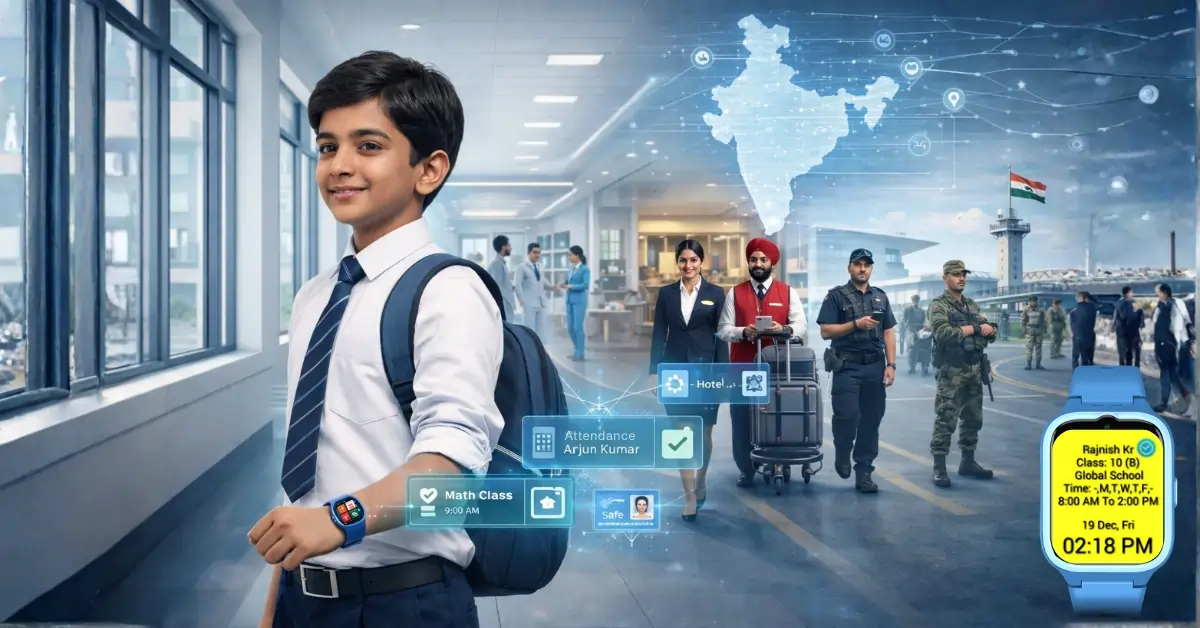
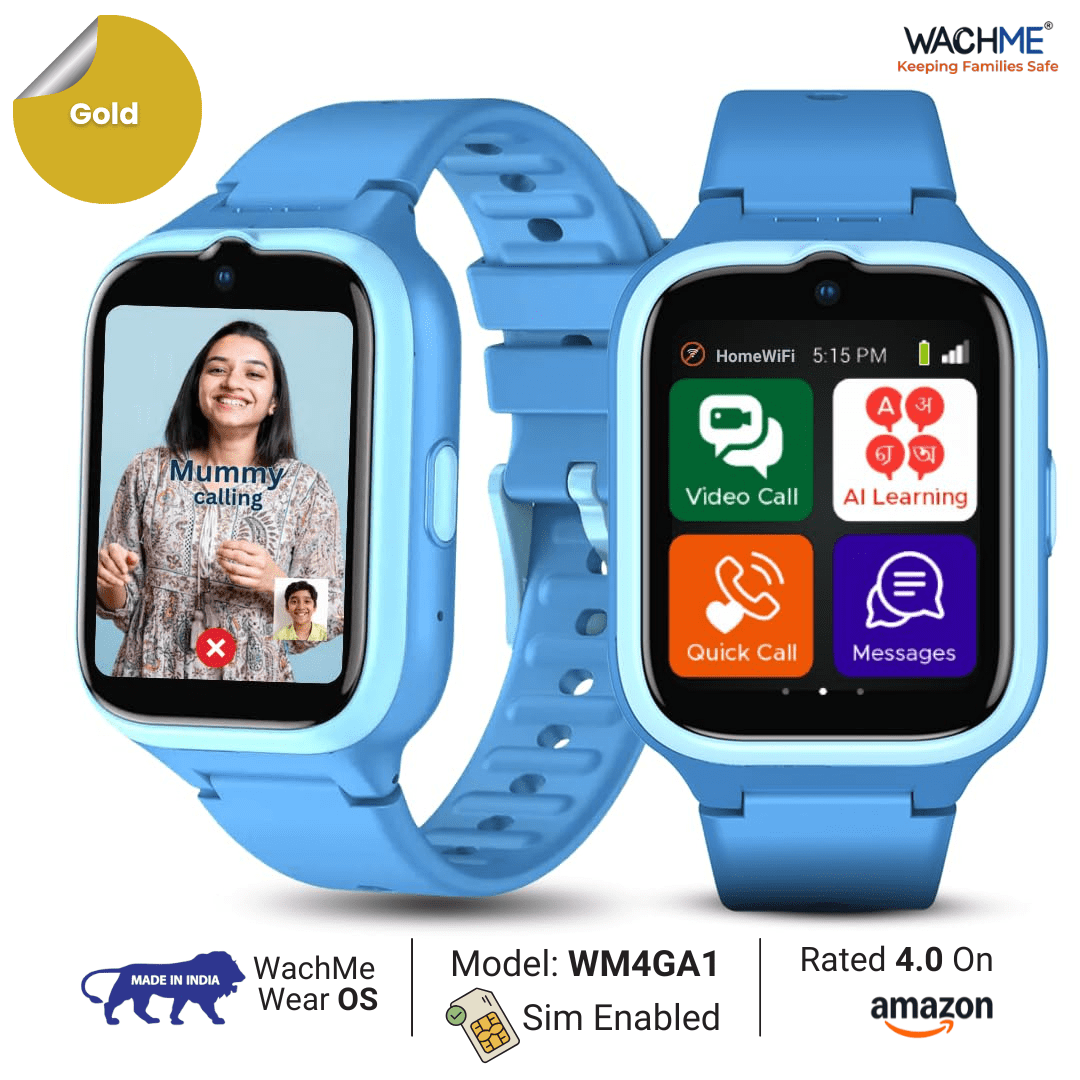
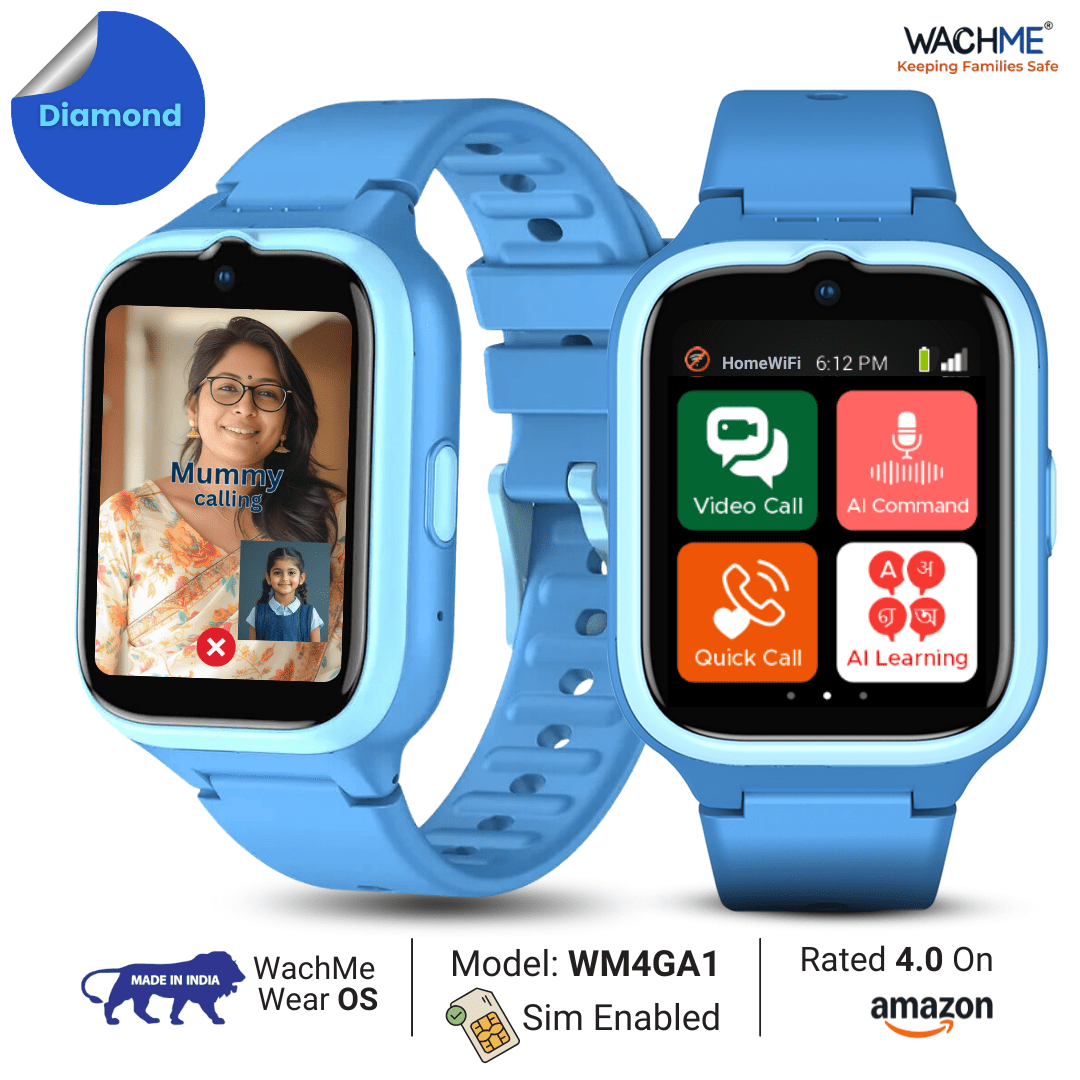
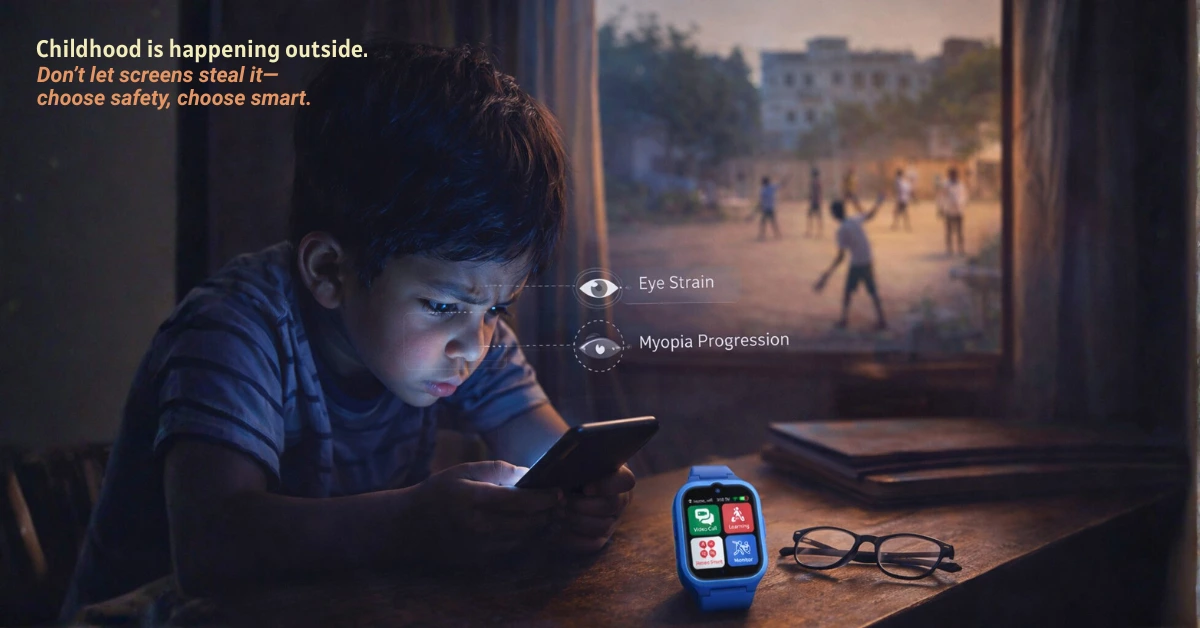
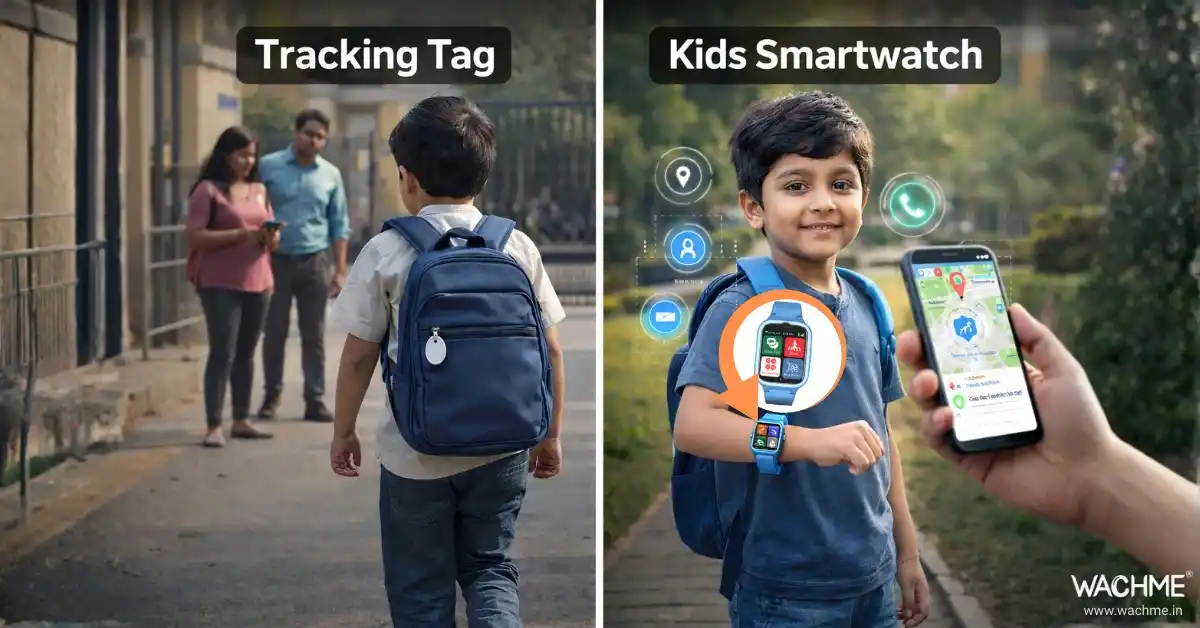
WachMe Wear OS is an Indian wearable operating system designed specifically for smartwatch-based safety, monitoring, and controlled communication. Unlike consumer-focused smartwatch platforms, it is engineered for structured environments such as schools, hospitals, and secure facilities. The system prioritises device control, data protection, and operational reliability over entertainment features.
What is WachMe Wearable Operating System?
WachMe Wear OS is a purpose-built wearable operating system developed to transform a smartwatch into a secure, policy-driven institutional device rather than a lifestyle gadget.
It functions as a controlled digital endpoint that enables:
- Safe communication
- Real-time location intelligence
- Emergency response mechanisms
- Administrative policy enforcement
Technically, WachMe Wear OS:
- Is built over an Android (AOSP) foundation
- Uses a heavily customised firmware layer
- Operates under a locked configuration model
- Restricts unauthorised software behaviour
Key characteristics:
- Not an open app ecosystem
- Not dependent on companion smartphones
- Not designed for entertainment usage
Instead, the OS is structured to serve:
- Students
- Staff members
- Patients
- Security personnel
- Institutional administrators
What Sets WachMe Wear OS Technically Apart?
Most smartwatch operating systems are designed for consumer engagement. WachMe Wear OS is designed for institutional governance.
Core differences include:
- Policy enforcement at OS level
- Restricted application framework
- Controlled communication channels
- Device behaviour aligned with organisational rules
Design priorities:
Device control > User freedom
Security > App flexibility
Reliability > Personalisation
Monitoring > Media consumption
This results in:
- Reduced misuse
- Predictable device behaviour
- Lower security exposure
- Better administrative oversight
Core Technology Architecture of WachMe Wear OS
WachMe Wear OS combines embedded firmware, device-level control mechanisms, connectivity modules, and controller software into a unified wearable system. The architecture enables secure smartwatch operations, real-time monitoring, and administrative command without relying on consumer-style OS behaviours or unrestricted third-party application ecosystems.
Device Firmware Layer
The firmware layer integrates hardware drivers, sensor management, power optimisation, and security controls. It governs how the smartwatch interacts with GPS, Wi-Fi, GSM modules, and motion sensors. This layer ensures stability, prevents unauthorised modifications, and enforces OS-level restrictions critical for institutional deployments.
Controller / Dashboard Software
The controller software acts as the administrative command centre. It allows institutions to configure policies, approve contacts, monitor device status, view location data, and manage alerts. The dashboard transforms WachMe devices into centrally governed endpoints rather than individually managed wearables.
Connectivity Stack (SIM, M2M, Wi-Fi)
WachMe Wear OS supports GSM SIM cards, M2M SIM deployments, and Wi-Fi-only operation. This flexible stack allows usage across open environments, private campuses, or telecom-restricted zones. Connectivity modes can be selected based on institutional security, cost, and infrastructure considerations.
Cloud & Device Synchronisation
Cloud synchronisation enables secure data exchange between the smartwatch and controller systems. It supports alerts, policies, logs, and location updates. The design focuses on lightweight, efficient communication, ensuring reliable performance without excessive battery consumption or network dependency.
Security & Device Control Framework
Security within WachMe Wear OS is implemented at the operating system level, not as an optional application layer.
This ensures:
- Consistent policy enforcement
- Reduced attack surface
- Controlled user behaviour
Locked Configuration Model
The OS prevents users from altering system settings that could bypass institutional policies. Critical controls such as connectivity behaviour, permissions, and functional restrictions remain administrator-governed. This eliminates configuration drift and protects organisational compliance frameworks.
Application & Installation Restrictions
WachMe Wear OS disables arbitrary application installation. Users cannot download apps, access app stores, or sideload software. This significantly reduces malware risks, prevents distractions, and ensures the device remains dedicated to safety, monitoring, and approved communication.
Data Extraction Prevention
The hardware and OS design restrict USB data transfer and folder visibility. Devices operate in charging-only modes, blocking unauthorised copying of logs, media, or records. This supports data leakage prevention strategies required by institutions handling sensitive information.
Approved Contacts & Communication Control
Communication is governed by whitelisting. Only administrator-approved numbers can call or message the device. This blocks spam, unknown contacts, and misuse, while ensuring predictable and auditable communication channels within structured environments.
Post-Quantum Cryptography (Planned)
Future integration of PQC aims to protect device communications against emerging quantum computing threats. Quantum-resistant encryption strengthens long-term security, particularly for defence, healthcare, and high-security infrastructure environments.
Smart Connectivity & Deployment Flexibility
Institutional environments differ widely. WachMe Wear OS is designed for adaptable deployment.
GSM SIM Support
With GSM SIM cards, WachMe devices function independently, supporting calls, messaging, and data connectivity. No companion smartphone is required, simplifying device management and improving mobility for students, staff, and field personnel.
M2M SIM Deployment
M2M SIM integration enables controlled telecom behaviour suitable for enterprise and government deployments. It allows restricted communication profiles, cost optimisation, and enhanced regulatory compliance.
SIM-less Wi-Fi Operation
Devices can operate entirely on institutional Wi-Fi networks. Calls, alerts, and data exchanges function via IP channels. This is particularly beneficial for closed campuses and telecom-restricted facilities.
Deployment in Secure / RF-Restricted Environments
Flexible connectivity modes allow WachMe devices to operate within defence zones, research centres, and controlled installations where standard consumer devices may be restricted.
Indoor & Outdoor Location Intelligence
Location intelligence is central to WachMe Wear OS functionality.
Outdoor Positioning Technologies (GPS, LBS, Wi-Fi)
Outdoor tracking combines GPS, cell tower triangulation (LBS), and Wi-Fi positioning. This hybrid approach improves reliability across varying signal conditions and urban environments.
Indoor Tracking via Wi-Fi Proximity
Indoor tracking uses Wi-Fi router proximity and signal strength analysis. It enables approximate floor-level or zone-level visibility within campuses and buildings where GPS signals degrade.
Use Cases Across Campuses & Facilities
Applications include student safety, staff coordination, patient monitoring, and security operations. Mobility-based tracking complements fixed surveillance systems like CCTV.
Factors Affecting Accuracy
Accuracy depends on Wi-Fi density, signal stability, building structure, and calibration. Institutions benefit from proper infrastructure mapping to optimise performance.
Controlled Communication System
Communication within WachMe Wear OS is structured for clarity and control.
Whitelisted Calling & Messaging
Only authorised contacts can initiate communication. This prevents distractions, spam, and unauthorised interactions.
Pre-Fed / No-Typing Messages
Predefined messages allow quick responses without keyboards. This reduces misuse and simplifies interaction.
Broadcast & Emergency Alerts
Administrators can send mass alerts instantly. Useful during emergencies or operational coordination.
Text-to-Speech Notifications
TTS functionality reads alerts aloud. Beneficial in hands-busy or visually restricted situations.
Safety & Emergency Response Capabilities
WachMe Wear OS integrates safety mechanisms directly into the device behaviour.
Manual SOS Activation
Users can trigger SOS alerts through hardware buttons. Designed for immediate assistance.
Automatic SOS Triggers
Sensor-based logic can detect abnormal events and trigger alerts automatically.
Fall Detection Mechanism
Motion sensors analyse acceleration and orientation changes to detect potential falls.
Geo-Fencing & Zone Monitoring
Institutions can define safe zones and receive alerts when boundaries are crossed.
Bully Monitoring / Voice Capture
Audio recording functions can assist in documenting safety incidents where permitted.
Safe Road Crossing & Safety Blinker
Visual and alert-based safety aids improve user visibility and situational awareness.
WachMe Wear OS introduces a structured wearable computing model designed for educational environments where safety, focus, and policy compliance are essential. Unlike smartphones, which are inherently distraction-driven, WachMe devices operate under institutional controls defined by administrators. The operating system restricts unauthorised applications, browsing, and social media usage, ensuring students remain engaged with learning rather than digital noise.
Key benefits:
- Reduced smartphone dependency
- Controlled student communication
- Emergency response readiness
- Distraction-free learning environment
- Improved safety visibility
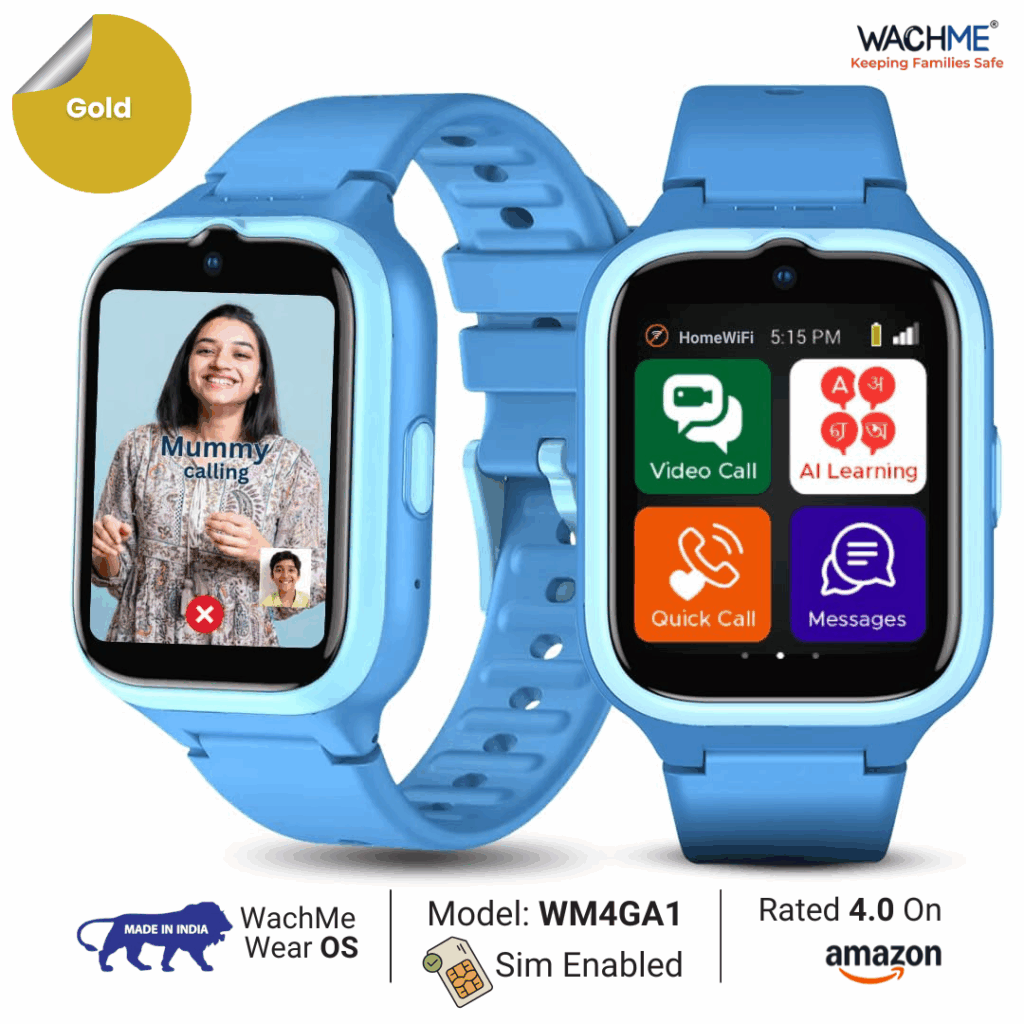
Healthcare environments demand reliability, hygiene compatibility, and immediate communication. WachMe Wear OS transforms the smartwatch into a hands-free operational device suited for clinical workflows. Medical staff often work in conditions where accessing phones is impractical or inappropriate. WachMe devices deliver alerts, messages, and emergency notifications directly to the wrist.
Key benefits:
- Hands-free alerts and messaging
- Indoor staff visibility
- Reduced device contamination risks
- Controlled communication channels
- Enhanced emergency responsiveness
WachMe Wear OS enables indoor and outdoor tracking of healthcare personnel through hybrid positioning technologies. Indoors, Wi-Fi signal proximity methods estimate zone-level presence. Outdoors, GPS and LBS technologies provide broader location awareness. This allows administrators to view staff distribution during shifts, emergencies, or critical events.
Key benefits:
- Real-time staff distribution overview
- Faster emergency coordination
- Improved shift management
- Enhanced lone-worker safety
- Reduced dependency on manual check-ins
Hospitality operations rely on timely coordination and guest service efficiency. WachMe Wear OS converts the smartwatch into a silent communication and task notification device. Staff receive alerts without intrusive phone usage, maintaining professionalism and discretion.
Key benefits:
- Silent staff alerts
- Faster task coordination
- Indoor movement awareness
- Distraction reduction
- Professional communication workflow
Staff Coordination & Task Dispatch
The OS supports broadcast alerts and pre-fed messaging for efficient staff communication. Supervisors can send instructions instantly without requiring staff to unlock or interact extensively with the device. Text-to-speech functionality enhances usability in fast-paced environments.
Key benefits:
- Instant broadcast messaging
- Hands-free notifications
- Faster task allocation
- Reduced communication delays
- Simplified staff response mechanisms
WachMe Wear OS for Airports & Large Infrastructure
Airports and large facilities present complex operational challenges involving staff mobility, zone restrictions, and rapid response needs. WachMe Wear OS provides a wearable-based coordination layer that complements existing infrastructure systems.
Indoor tracking via Wi-Fi proximity assists in approximate personnel visibility across terminals, gates, or restricted areas. Broadcast alerts enable immediate dissemination of instructions during operational disruptions or emergencies.
The locked OS design ensures devices cannot be repurposed for unauthorised use, maintaining security integrity within sensitive environments.
Key benefits:
- Zone-level personnel visibility
- Rapid emergency communication
- Reduced misuse risks
- Mobility beyond CCTV coverage
- Structured wearable operations
WachMe Wear OS for Military & High-Security Installations
Military and high-security facilities require predictable device behaviour, restricted communication, and robust security controls. WachMe Wear OS is designed to operate within structured policy frameworks where consumer devices may be unsuitable.
The locked configuration model prevents unauthorised software installation or behavioural modifications. Connectivity flexibility allows deployment using GSM, M2M SIMs, or secure Wi-Fi networks. Tracking capabilities assist in patrol monitoring, personnel safety, and operational awareness.
Planned Post-Quantum Cryptography integration aims to further strengthen long-term communication security.
Key benefits:
- Controlled communication endpoints
- Policy-enforced device behaviour
- Flexible secure connectivity
- Patrol and personnel support
- Reduced data leakage risks
Administrative Control & Customisation Capabilities
WachMe Wear OS is designed to function under centralised institutional governance rather than individual user control.
Dashboard / Controller Management
Administrators manage devices through controller software providing visibility into status, alerts, connectivity, and location. This centralised approach simplifies large-scale device oversight.
Policy & Feature Configuration
Institutions define operational rules such as communication restrictions, school mode timing, SOS behaviour, and tracking parameters.
Contact Whitelisting
Only approved contacts are permitted. This prevents spam, misuse, and unauthorised interactions.
Device Approval & Identification
Approved devices can display visual indicators. This assists administrators in identifying authorised usage within campuses.
Sector-Specific Customisation
Features and behaviours can be adapted for education, healthcare, hospitality, infrastructure, or defence environments.
Integration Possibilities
ERP & Attendance Systems
WachMe Wear OS can integrate with ERP and attendance platforms using APIs or middleware layers, enabling automated workflows.
Security & Monitoring Workflows
Location and alert data can complement institutional safety and monitoring systems.
Emergency Response Systems
SOS and broadcast alerts can align with emergency escalation protocols.
Comparison with Traditional Alternatives
WachMe Wear OS occupies a distinct position between consumer smartwatches, smartphones, pagers, and tracking devices. Traditional tools solve isolated problems. WachMe Wear OS combines communication control, safety logic, and location intelligence within a single wearable endpoint.
| Feature / Capability |
WachMe Wear OS |
Smartphone |
Feature Phone |
Pager |
CCTV |
| Indoor Location Tracking |
Yes |
Limited |
No |
No |
No |
| App Installation Control |
Fully Restricted |
No |
No |
Yes |
NA |
| Distraction-Free Usage |
Yes |
No |
Partial |
Yes |
Yes |
| SOS / Emergency Alerts |
Yes |
Rare |
No |
No |
No |
| Approved Contacts Only |
Yes |
No |
No |
No |
NA |
| Data Extraction Protection |
Yes |
No |
No |
No |
Yes |
| Broadcast Messaging |
Yes |
No |
No |
Limited |
No |
| SIM-less Wi-Fi Operation |
Yes |
No |
No |
No |
NA |
Unlike CCTV, WachMe devices move with the user. Unlike smartphones, they do not introduce distraction or misuse risks.
Scalability & Deployment Models
WachMe Wear OS is designed for structured rollouts rather than ad-hoc device usage.
Single-Campus Deployment
Institutions such as schools or hospitals can deploy WachMe Wear OS within a closed environment using Wi-Fi infrastructure. Devices operate under central policies, enabling communication control, indoor tracking, and safety features without telecom dependency. Administrative visibility remains consistent across classrooms, wards, or departments.
Multi-Branch Institutions
Organisations with multiple locations can manage WachMe devices through a unified controller framework. Policies, alerts, and reporting structures remain standardised while allowing site-specific configurations. This model supports educational groups, hospital chains, hospitality networks, and distributed operational facilities.
Enterprise Rollout Strategy
Large deployments benefit from phased onboarding, device provisioning controls, role-based policy templates, and infrastructure mapping. WachMe Wear OS integrates into existing governance frameworks, ensuring predictable behaviour, simplified compliance management, and reduced operational disruption during expansion.
Why Institutions are Adopting WachMe Wear OS
Safety Enhancement
Institutions increasingly prioritise real-time safety mechanisms. WachMe Wear OS provides SOS alerts, geo-fencing, fall detection, and controlled communication. These features enable faster incident response, improved visibility, and reduced dependency on manual supervision or reactive safety measures.
Distraction Reduction
Smartphones introduce behavioural unpredictability. Notifications, social media, and gaming disrupt structured environments. WachMe Wear OS removes non-essential digital stimuli, ensuring students and staff interact only with relevant alerts, tasks, and approved communications.
Policy Compliance
Educational and healthcare institutions operate under defined regulatory and behavioural policies. WachMe Wear OS enforces restrictions at the operating system level. Users cannot bypass rules, install unauthorised software, or modify device behaviour.
Operational Visibility
Wearable-based location intelligence enables administrators to understand movement patterns, staff availability, and zone-level presence. This supports safety coordination, resource allocation, and emergency management without intrusive monitoring systems.
Indian Technology Advantage
WachMe Wear OS represents an Indian-developed wearable operating system designed for local institutional requirements. Domestic technology development offers long-term adaptability, deployment flexibility, and alignment with regional compliance frameworks.
Request a Demo / Institutional Consultation
Institutions evaluating wearable safety or controlled communication systems often require clarity before deployment. A structured demonstration helps administrators understand device behaviour, dashboard controls, policy configuration, and integration possibilities. WachMe consultations typically assess infrastructure readiness, use-case alignment, security expectations, and scalability planning. This ensures deployments remain practical, compliant, and operationally beneficial rather than experimental.
Conclusion
WachMe Wear OS introduces a different category of wearable computing. It is not designed for entertainment or lifestyle enhancement. It is designed for structured environments where safety, control, and reliability matter. By combining device restrictions, location intelligence, and emergency logic within a smartwatch, the system supports institutions seeking predictable and governed digital tools.
FAQs
Q1. What is WachMe Wear OS primarily designed for?
WachMe Wear OS is designed for institutional safety, monitoring, and controlled smartwatch communication across education, healthcare, hospitality, infrastructure, and defence environments.
Q2. Can users install apps on WachMe devices?
WachMe Wear OS restricts arbitrary app installation, preventing distractions, malware risks, and policy violations within structured institutional deployments.
Q3. Does WachMe Wear OS require a smartphone companion?
No. Devices operate independently using GSM SIM, M2M SIM, or Wi-Fi connectivity depending on deployment configuration.
Q4. How does WachMe handle indoor tracking?
Indoor tracking uses Wi-Fi proximity and signal analysis to estimate zone-level location where GPS signals are unreliable.
Q5. Is WachMe Wear OS suitable for schools?
WachMe Wear OS supports distraction-free communication, SOS alerts, geo-fencing, bully monitoring, and administrator-controlled School Mode.
Q6. How is communication controlled?
Only administrator-approved contacts can call or message WachMe devices, ensuring predictable and secure interactions.
Q7. Can WachMe devices work without SIM cards?
WachMe Wear OS supports SIM-less operation using institutional Wi-Fi networks for communication and synchronisation.
Q8. How does WachMe protect sensitive data?
The OS restricts data extraction, disables USB transfer modes, and prevents unauthorised software access.
Q9. What makes WachMe different from consumer smartwatches?
WachMe Wear OS prioritises control, safety, and policy enforcement rather than apps, media, or lifestyle features.
Q10. Is WachMe Wear OS future-ready for security threats?
Planned Post-Quantum Cryptography integration aims to enhance long-term communication security resilience.